
|
Features
|
|
|
|
Books
|
|
|
|
Fun & Games
|
|
|
|
Contact Us
|
|
|
John's Journal... Entry 45, Day 4
Feed the Bluegills
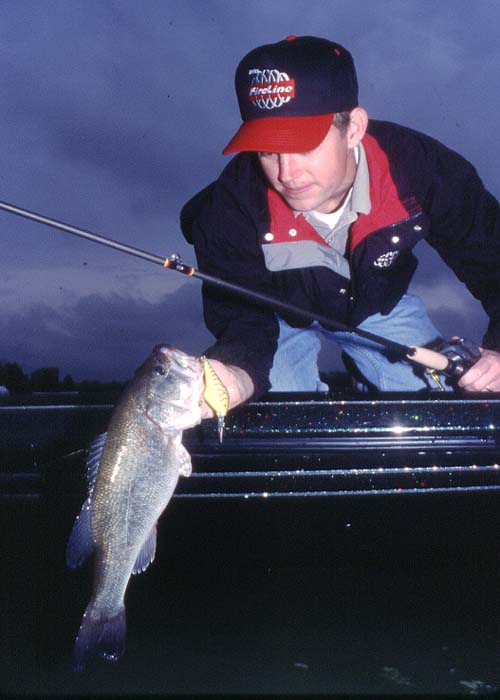 EDITOR'S
NOTE: To have a fishing hole that consistently will produce 8- pound bass
or bigger, you'll have to do your homework. To pinpoint and fish these
types of ponds, have a friend who's already intensively managing his pond.
Or, manage your own farm pond carefully. But to have a big-bass fishing
pond to fish, rent, lease, borrow or obtain permission from the landowner
for you to help pay for the maintenance needed to build your dream pond.
EDITOR'S
NOTE: To have a fishing hole that consistently will produce 8- pound bass
or bigger, you'll have to do your homework. To pinpoint and fish these
types of ponds, have a friend who's already intensively managing his pond.
Or, manage your own farm pond carefully. But to have a big-bass fishing
pond to fish, rent, lease, borrow or obtain permission from the landowner
for you to help pay for the maintenance needed to build your dream pond.
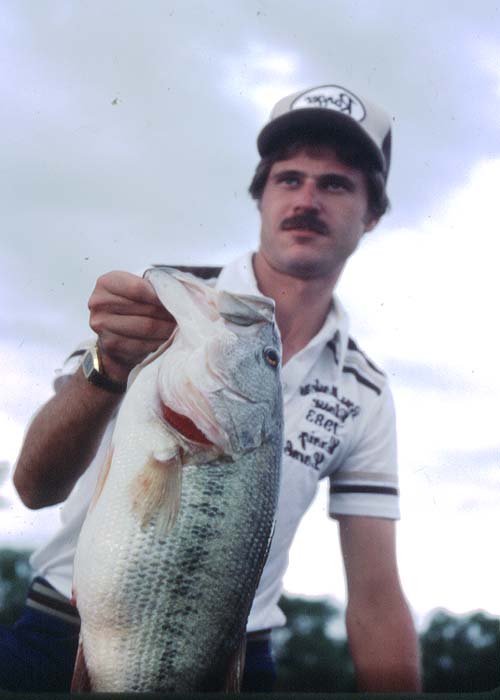 "I've
seen some ponds turned around from crowded-bass conditions to producing
more bigger bass by initiating a bluegill feeding program," Don Keller,
a fisheries biologist and co-owner of American Sportfish, a fish hatchery
in Montgomery, Alabama, mentioned. "When you put pelletized food into
a pond, you're actually feeding a bluegill. The more food a bluegill eats,
the faster it grows, and the more offspring it produces, which results
in more food for the bass.
"I've
seen some ponds turned around from crowded-bass conditions to producing
more bigger bass by initiating a bluegill feeding program," Don Keller,
a fisheries biologist and co-owner of American Sportfish, a fish hatchery
in Montgomery, Alabama, mentioned. "When you put pelletized food into
a pond, you're actually feeding a bluegill. The more food a bluegill eats,
the faster it grows, and the more offspring it produces, which results
in more food for the bass.
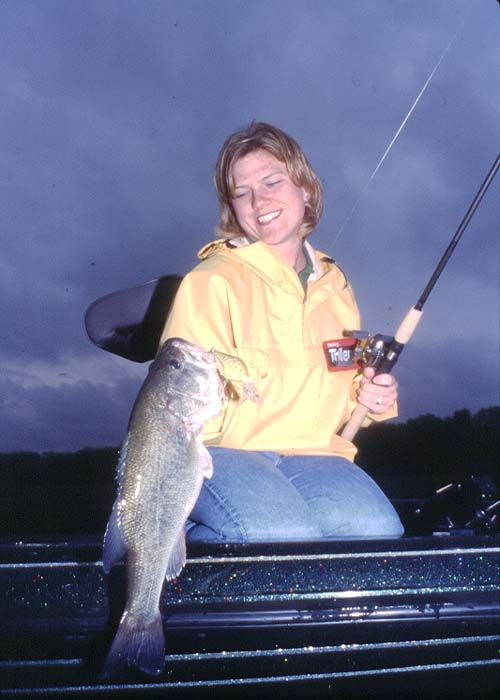 "However,
one important key to remember is that bluegills have small stomachs. You'll
have to feed them small amounts of food about four times a day. An automatic
feeder can be set to feed four times during a 24-hour period. Although
you don't have to feed large amounts of food, you do have to feed frequently.
Although feeding alone is not the best option to turn a pond around quickly,
it can drastically improve the number and size of bluegills in the pond
quickly, thereby also improving the size of the bass you're catching."
"However,
one important key to remember is that bluegills have small stomachs. You'll
have to feed them small amounts of food about four times a day. An automatic
feeder can be set to feed four times during a 24-hour period. Although
you don't have to feed large amounts of food, you do have to feed frequently.
Although feeding alone is not the best option to turn a pond around quickly,
it can drastically improve the number and size of bluegills in the pond
quickly, thereby also improving the size of the bass you're catching."
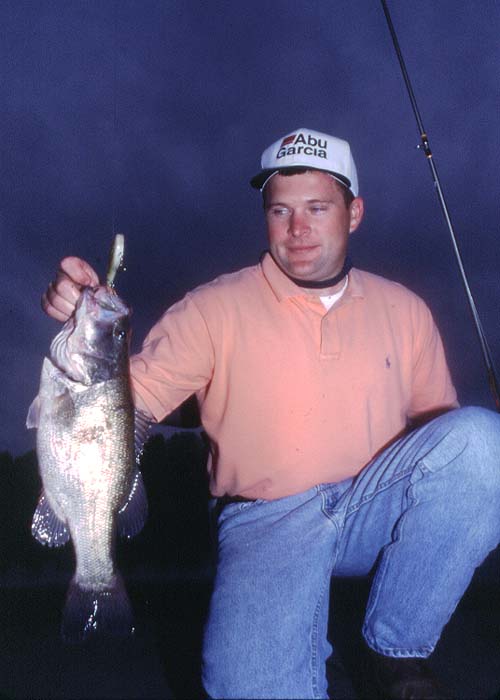 To
learn more about growing big bass, send a self-addressed, stamped envelope
to ...
To
learn more about growing big bass, send a self-addressed, stamped envelope
to ...
* American Sportfish, % Don Keller, PO Drawer 20050, Montgomery, AL 36120 to get a special free report, "Secrets to Small-Pond Management" and
* Moultrie Feeders, 150 Industrial Road, Alabaster, AL 35007 for free information on fish feeders and a free tip sheet, "Ten Secrets to Raising More Fish in Your Farm Pond."
Tomorrow: Opt For The Best Plan
Check back each day this week for more about How To Raise Big Bass ...
Day 1 -Quick-Fix
Day 2 -Eat Skillet-Sized Bass from Your Pond
Day 3 -Make a Small-Bass Pond a Big-Bass
Pond
Day 4 -Feed the Bluegills
Day 5 -Opt for the Best Plan