
|
Features
|
|
|
|
Books
|
|
|
|
Fun & Games
|
|
|
|
Contact Us
|
|
|
John's Journal... Entry 51, Day 2
Scouting Thick Cover
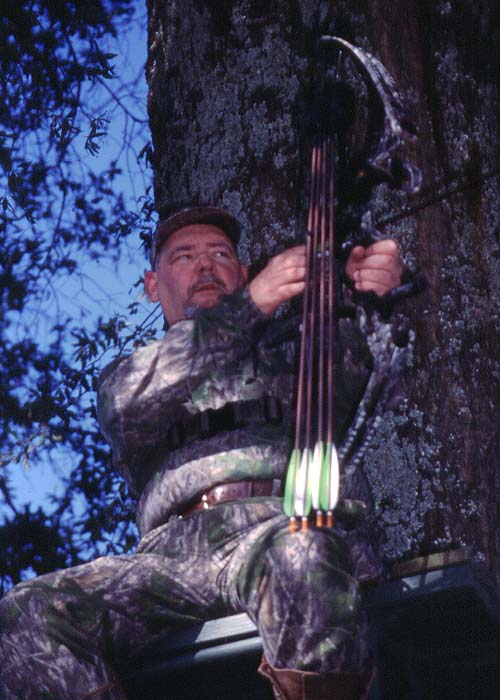 Editor's
Note: Many bowhunters think of themselves as two-season hunters who hunt
with bows and arrows during bow season and then become gun hunters as
soon as gun season arrives. However, in the states that have bow season
and gun season occurring simultaneously, a sportsman may have a greater
chance of taking a trophy buck with a bow during gun season than he does
with a gun.
Editor's
Note: Many bowhunters think of themselves as two-season hunters who hunt
with bows and arrows during bow season and then become gun hunters as
soon as gun season arrives. However, in the states that have bow season
and gun season occurring simultaneously, a sportsman may have a greater
chance of taking a trophy buck with a bow during gun season than he does
with a gun.
To bowhunt successfully, scout thick cover for food, bedding areas and tree stand sites. Spend most of your scouting time evaluating these spots that have the least amount of hunting pressure. You'll probably discover the largest and oldest bucks in these regions, since the more mature animals will respond quickest to hunting pressure and will spend most of their daylight hours in thick cover during gun season. Learn all you can about the thickets big bucks must utilize during gun/deer season.
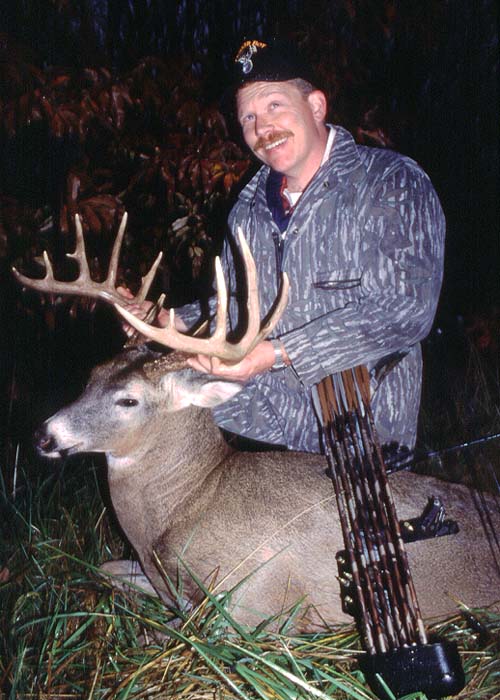 Deer
will frequent two types of thickets when hunting pressure forces them
into heavy cover -- the thickets you can hunt and the ones you can't hunt.
The ones you can hunt will have some type of clearing or a bald spot where
you can build a ground blind in them or a tree that's sturdy enough for
you to put your tree stand.
Deer
will frequent two types of thickets when hunting pressure forces them
into heavy cover -- the thickets you can hunt and the ones you can't hunt.
The ones you can hunt will have some type of clearing or a bald spot where
you can build a ground blind in them or a tree that's sturdy enough for
you to put your tree stand.
A bowhunter can see deer in an overgrown thicket and hunt there, although others may find it difficult to hunt, if it has shooting lanes spoking out from a tree stand site. Also a bowhunter can have success hunting a thicket with a creek running through it that provides access to that thicket. The thickets you can't hunt won't have openings in them or creeks, washes or ditches running through them or trees where you can place a tree stand. However, deer will utilize these thickets as sanctuaries. They will have escape trails leading from the open woods into that thick cover.
My friend Mike Fine of Missouri has taken five Pope and Young bucks with his bow and hunts the trails leading to thick cover well away from the road system.
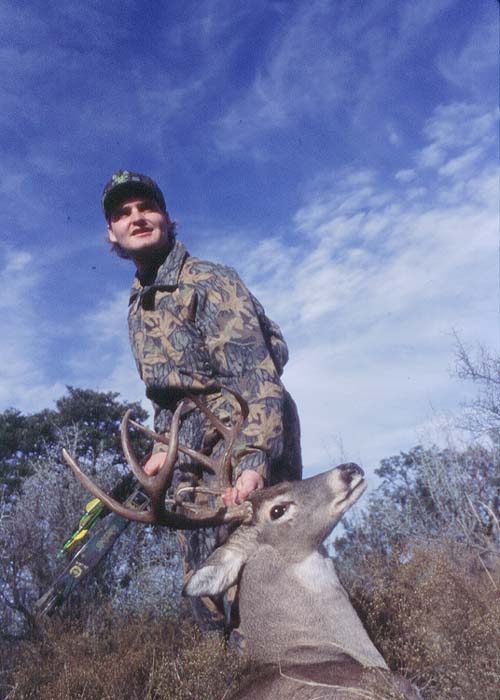 "Deer
travel escape trails to get away from hunting pressure and to head into
thick cover," Fine reported. "Remember when hunting escape trails that
the bowhunter must be far enough away from major roads so when the bucks
come down the trail to escape early morning hunting pressure, he can see
those deer during daylight hours. If you hunt an escape trail too close
to hunting pressure, deer will move down that trail before daylight, and
you'll never spot the animals.
"Deer
travel escape trails to get away from hunting pressure and to head into
thick cover," Fine reported. "Remember when hunting escape trails that
the bowhunter must be far enough away from major roads so when the bucks
come down the trail to escape early morning hunting pressure, he can see
those deer during daylight hours. If you hunt an escape trail too close
to hunting pressure, deer will move down that trail before daylight, and
you'll never spot the animals.
"Something else to remember when hunting escape trails is to take a stand downwind of the trail and not tight on top of the trail. I've found that deer walking down a trail will be looking up the trail. If you take a stand on that trail, more than likely the buck will spot you before you can get off a shot. But if you're 20 yards off the trail and downwind of the buck, generally he'll never detect you before you can draw and shoot."
Fine also has found that keeping human odor out of an area where he hunts makes him more successful.
"That's why I wash my hunting clothes and bathe in some type of odor-eliminating soap before I go into the woods," Fine emphasized. "The less human odor you leave in the place you hunt, the better your odds are of bagging a buck there."
After you have a thorough knowledge of the thickets, make the decision not to hunt them until the peak of gun season. During bow season, don't go near these thick areas. The less human odor a buck encounters and the fewer human sightings he has in one of these sanctuaries, the more likely that he will frequent those sanctuaries when hunting pressure builds.
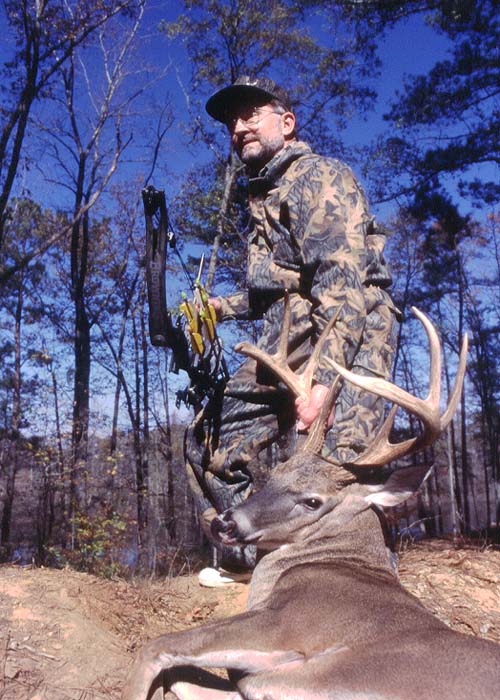 Once
the peak of gun season arrives, don't use the same trail going into these
thickets each time you enter them. Also, always carefully notice the wind.
Don't move into the thickets with a wind that's wrong that will carry
your scent to the deer you're attempting to bag. Hunters also can identify
places to bowhunt for deer in various parts of the country that hunters
in other sections of the nation may not hunt successfully.
Once
the peak of gun season arrives, don't use the same trail going into these
thickets each time you enter them. Also, always carefully notice the wind.
Don't move into the thickets with a wind that's wrong that will carry
your scent to the deer you're attempting to bag. Hunters also can identify
places to bowhunt for deer in various parts of the country that hunters
in other sections of the nation may not hunt successfully.
As Fine, who has moved several times around the nation in his PR career, reports, "Just like being versatile in how you fish is important, so is having an open mind essential to successful bowhunting. For example in Iowa where I once lived, deer actually lived in the crops -- soybeans and corn.
"I once asked a game warden in Iowa how many acres of woods the state had. He told me, 'Seven million, but they're all in corn.' When I moved to Iowa I had to readjust my thinking to pinpoint what was a bowhunting hotspot."
Check back each day this week for more about Bowhunters Have The Edge For Big Bucks ...
Day 1 -Shrinking the Woods
Day 2 -Scouting Thick Cover
Day 3 -Letting the Gun Hunter Drive the Bucks
to You
Day 4 -Determining the Best Times to Bowhunt
During Gun Season
Day 5 -Learning the Best Days to Bag a Trophy
Buck During Gun Season