
|
Features
|
|
|
|
Books
|
|
|
|
Fun & Games
|
|
|
|
Contact Us
|
|
|
John's Journal... Entry 181, Day 1
THE WAR AGAINST NUTRIA
A Call to War Against Nutria
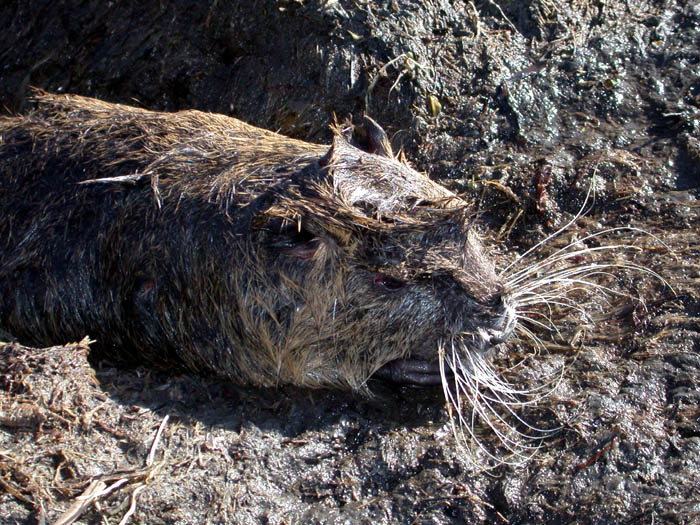 EDITOR'S
NOTE: Nutria, semi-aquatic rodents with the proper
name of coypu, have eaten away at Louisiana's marshlands for some years.
The federal government has sent Louisiana $2 million to fight the war
on nutria. These l2- to 18-pound demons detrimentally impact about 100,000
acres of wildlife-rich marshlands each year. If someone doesn't stop them,
other coastal states may face drastic land loss thanks to these furry
Argentine invaders. So, now predator hunters have a new predator to hunt.
And sportsmen who get permission to hunt nutria from Louisiana landowners
can get paid for the nutria tails they harvest.
EDITOR'S
NOTE: Nutria, semi-aquatic rodents with the proper
name of coypu, have eaten away at Louisiana's marshlands for some years.
The federal government has sent Louisiana $2 million to fight the war
on nutria. These l2- to 18-pound demons detrimentally impact about 100,000
acres of wildlife-rich marshlands each year. If someone doesn't stop them,
other coastal states may face drastic land loss thanks to these furry
Argentine invaders. So, now predator hunters have a new predator to hunt.
And sportsmen who get permission to hunt nutria from Louisiana landowners
can get paid for the nutria tails they harvest.
MY FIRST PATROL:
 I've
enlisted and begun to fight in the War for the Nursery. I've slain some
of the enemies, and I've brought back a report from the battlefield. Outdoorsmen
must win the little-known war that's raging on Louisiana's Gulf Coast,
or fishermen across the nation - including those who fish the Gulf of
Mexico - will suffer. Uncle Sam needs you to fight in the second Battle
of New Orleans. The invaders landed more than 60-years ago, but now Louisiana
has sent out a call to arms to all predator hunters. As my friend Bo Hamilton
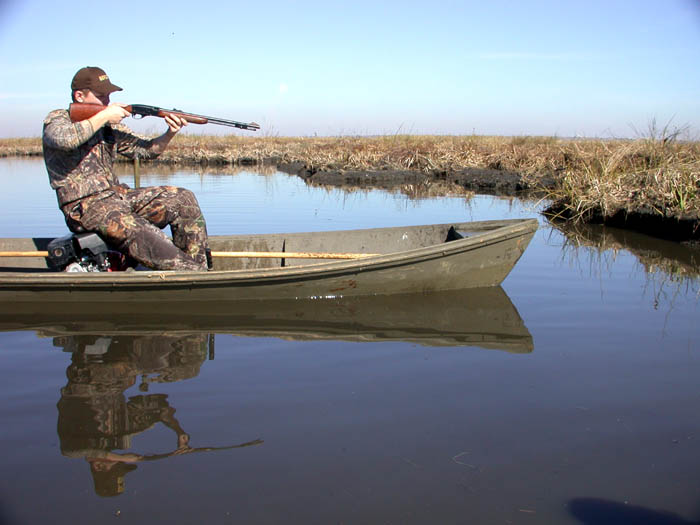
of Baratria, Louisiana, and I slipped through the marsh silently and quietly
in his mud boat, we spotted a V shape in the water and a brown head that
looked like a small beaver. A furry creature about 1-foot long with a
1-1/2-foot-long tail crawled out on the bank. Bo Hamilton touched off
the trigger of his .12 gauge, and the nutria rolled up in a heap. Because
I'd never seen a nutria before, I wanted to get a closer look at this
marsh-destroying creature. The nutria resembled a giant muskrat with big
canine teeth much like a beaver's. It had brown, fluffy fur and webbed
back feet. Although a rodent, it had a more flattened tail instead of
a round tail like a rat.
I've
enlisted and begun to fight in the War for the Nursery. I've slain some
of the enemies, and I've brought back a report from the battlefield. Outdoorsmen
must win the little-known war that's raging on Louisiana's Gulf Coast,
or fishermen across the nation - including those who fish the Gulf of
Mexico - will suffer. Uncle Sam needs you to fight in the second Battle
of New Orleans. The invaders landed more than 60-years ago, but now Louisiana
has sent out a call to arms to all predator hunters. As my friend Bo Hamilton
of Baratria, Louisiana, and I slipped through the marsh silently and quietly
in his mud boat, we spotted a V shape in the water and a brown head that
looked like a small beaver. A furry creature about 1-foot long with a
1-1/2-foot-long tail crawled out on the bank. Bo Hamilton touched off
the trigger of his .12 gauge, and the nutria rolled up in a heap. Because
I'd never seen a nutria before, I wanted to get a closer look at this
marsh-destroying creature. The nutria resembled a giant muskrat with big
canine teeth much like a beaver's. It had brown, fluffy fur and webbed
back feet. Although a rodent, it had a more flattened tail instead of
a round tail like a rat.
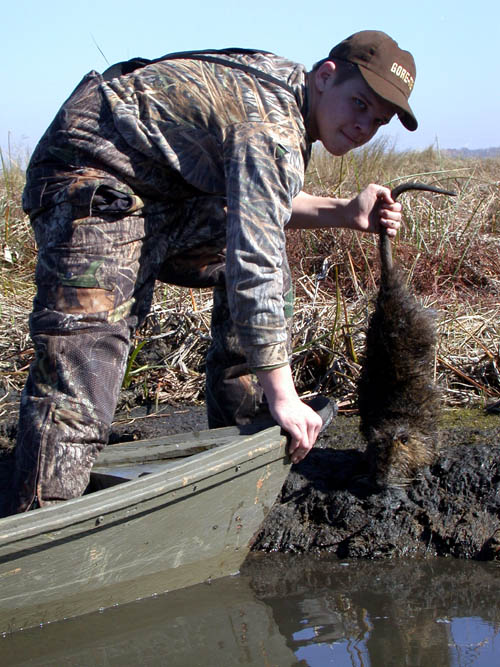 "Let's
go get another one," Hamilton said. As we eased down the marsh, we spotted
another nutria. "When it gets on the bank, John, take it," Hamilton instructed.
"Prepare to shoot quickly because it won't stop once it hits the bank."
I readied for the shot. Once the nutria climbed out on the bank, I took
it. "We can get out on the bank and hunt nutria in the marsh and jump-shoot
them like we do rabbits," Hamilton explained. "But you can cover more
ground and find more nutria from a boat than you can by stomping through
the marsh. We won't have any problems shooting all the nutria we care
to shoot today. On an average day's hunt, one hunter may harvest as many
as 30 to 50 nutria."
"Let's
go get another one," Hamilton said. As we eased down the marsh, we spotted
another nutria. "When it gets on the bank, John, take it," Hamilton instructed.
"Prepare to shoot quickly because it won't stop once it hits the bank."
I readied for the shot. Once the nutria climbed out on the bank, I took
it. "We can get out on the bank and hunt nutria in the marsh and jump-shoot
them like we do rabbits," Hamilton explained. "But you can cover more
ground and find more nutria from a boat than you can by stomping through
the marsh. We won't have any problems shooting all the nutria we care
to shoot today. On an average day's hunt, one hunter may harvest as many
as 30 to 50 nutria."
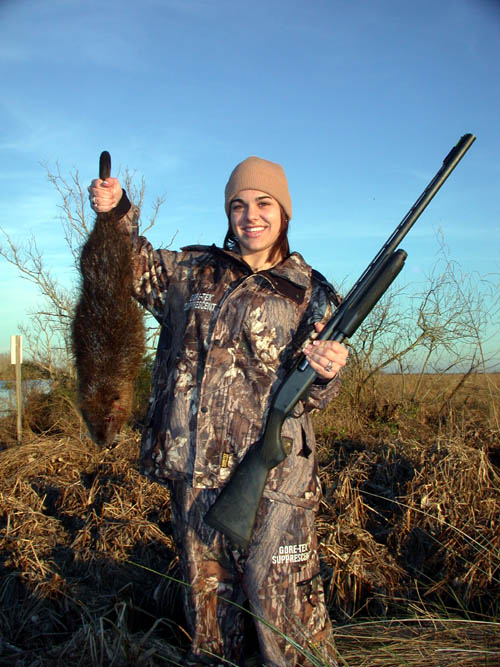
If you think western hunters enjoy prairie-dog shooting, then head to south Louisiana to hunt nutria this year. You'll find a target-rich environment and a state that welcomes all those who want to take these marsh menaces. In 2-1/2- hours of nutria hunting, Hamilton and I took and boated nine nutria -- more than enough for our friend Morgan Perrin to create a delicious nutria sauce picante.
GOOD NEWS FOR NUTRIA HUNTERS:
 The
federal government and the state of Louisiana have posted a $4-per-tail
reward on all the nutria harvested by hunters and trappers during the
Louisiana trapping season. However, you don't have to wait until trapping
season to start hunting nutria for fun. The recreational season on nutria
(where you can't collect the $4 per tail) opens September 1 and lasts
through February 28. You must have the permission of the landowner and
a valid hunting license to hunt the nutria. Too, many of the state wildlife
management areas (WMAs) permit recreational hunting of nutria. An out-of-state
hunter can hunt nutria during the recreational season on these lands and
also can purchase a trapper's license for trapping season.
The
federal government and the state of Louisiana have posted a $4-per-tail
reward on all the nutria harvested by hunters and trappers during the
Louisiana trapping season. However, you don't have to wait until trapping
season to start hunting nutria for fun. The recreational season on nutria
(where you can't collect the $4 per tail) opens September 1 and lasts
through February 28. You must have the permission of the landowner and
a valid hunting license to hunt the nutria. Too, many of the state wildlife
management areas (WMAs) permit recreational hunting of nutria. An out-of-state
hunter can hunt nutria during the recreational season on these lands and
also can purchase a trapper's license for trapping season.
For information on the World Championship Nutria Hunt or to go nutria hunting, call the Lodge of Louisiana at (504) 689-0000, or visit the Web site at www.lodgeoflouisiana.com.
Check back each day this week for more about THE WAR AGAINST NUTRIA ...
Day 1 - A Call to War Against
Nutria
Day 2 - The History of Nutria
Day 3 - Nutria Hunting for Money
Day 4 - Nutria Festivities
Day 5 - How Nutria Have Affected Inshore
Fish Populations