
|
Features
|
|
|
|
Books
|
|
|
|
Fun & Games
|
|
|
|
Contact Us
|
|
|
John's Journal... Entry 189, Day 2
REASONS WHY I MISS TURKEYS
The Canting Gobbler
 EDITOR'S
NOTE: The one thing I know for certain is that
the only people who don't miss turkeys are the people who don't hunt them.
Regardless of how well you shoot, how close you let the turkeys get, what
type of gun and ammunition you use and how many years you've been hunting,
you're still going to miss turkeys. Turkeys have an uncanny ability to
dodge shots. I don't know how they do it; they just do. This week we're
looking at reasons why I've missed turkeys. Most hunters probably won't
tell on themselves. However, I know that the turkey hunters who read this
article will appreciate my honesty and perhaps learn from my mistakes.
EDITOR'S
NOTE: The one thing I know for certain is that
the only people who don't miss turkeys are the people who don't hunt them.
Regardless of how well you shoot, how close you let the turkeys get, what
type of gun and ammunition you use and how many years you've been hunting,
you're still going to miss turkeys. Turkeys have an uncanny ability to
dodge shots. I don't know how they do it; they just do. This week we're
looking at reasons why I've missed turkeys. Most hunters probably won't
tell on themselves. However, I know that the turkey hunters who read this
article will appreciate my honesty and perhaps learn from my mistakes.
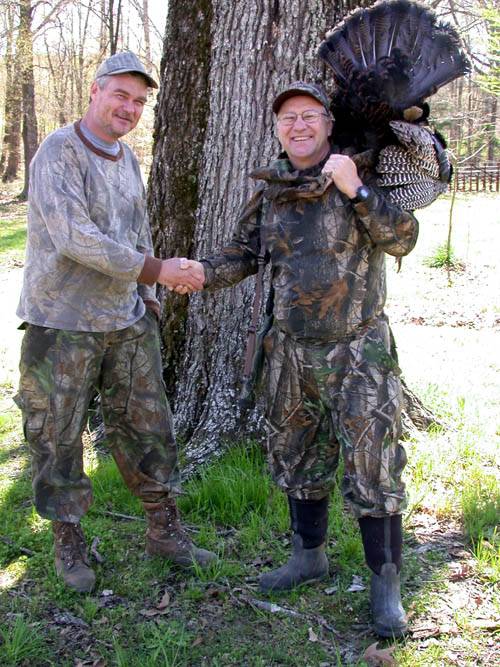
Dale Faust of Brewton, Alabama, and I had climbed to the top of a mountain in Montana to take a Merriam's gobbler that was screaming at the top of his lungs. We'd moved into position to call to the bird. I had my back against one pine tree, and a smaller 6-inch pine was directly in front of me. Suddenly, the big tom walked into a clear open field, not 30 yards from where I sat. When the turkey turned its back to me, I shouldered my Remington 1187. The turkey stepped right in front of the pine tree in front of me, so I leaned out slightly. And as the bird broke his strut and stuck his head up to look for the hen, I aimed and squeezed the trigger. The gobbler flew off. I couldn't believe it. How could the turkey fly off with that much lead in his head? I chased the bird, thinking he was probably going to fold-up and drop. But he didn't. He flew about 70 yards to another mountainside and then took off running.
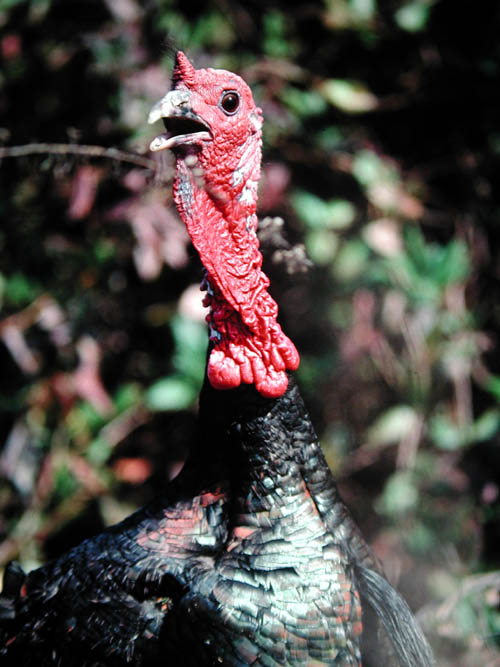 "How
in the world did you miss that gobbler with as clean a shot as you had?"
Faust asked me. I dropped my head and said, "I don't know. I can't believe
I missed that bird." When you miss a gobbler as cleanly as I did, your
natural instinct is to blame your gun, your shells, your camouflage, your
guide, your underwear, your breakfast and/or your upbringing. But I had
no excuse. "Go sit down by the tree and try to relive the shot," Faust
suggested. I marched over to the tree, sat down, mounted my shotgun and
then leaned out so I could aim behind the tree that was in front of me.
"There's your problem, John." Foust laughed. "I see what you did wrong.
Look where the bead on your shotgun is." I couldn't believe it; I had
canted my gun (rolled it off my shoulder) to the left. Although I was
looking down the barrel, the bead was off so far that I must have aimed
behind the turkey.
"How
in the world did you miss that gobbler with as clean a shot as you had?"
Faust asked me. I dropped my head and said, "I don't know. I can't believe
I missed that bird." When you miss a gobbler as cleanly as I did, your
natural instinct is to blame your gun, your shells, your camouflage, your
guide, your underwear, your breakfast and/or your upbringing. But I had
no excuse. "Go sit down by the tree and try to relive the shot," Faust
suggested. I marched over to the tree, sat down, mounted my shotgun and
then leaned out so I could aim behind the tree that was in front of me.
"There's your problem, John." Foust laughed. "I see what you did wrong.
Look where the bead on your shotgun is." I couldn't believe it; I had
canted my gun (rolled it off my shoulder) to the left. Although I was
looking down the barrel, the bead was off so far that I must have aimed
behind the turkey.
When Scopes Don't Work:
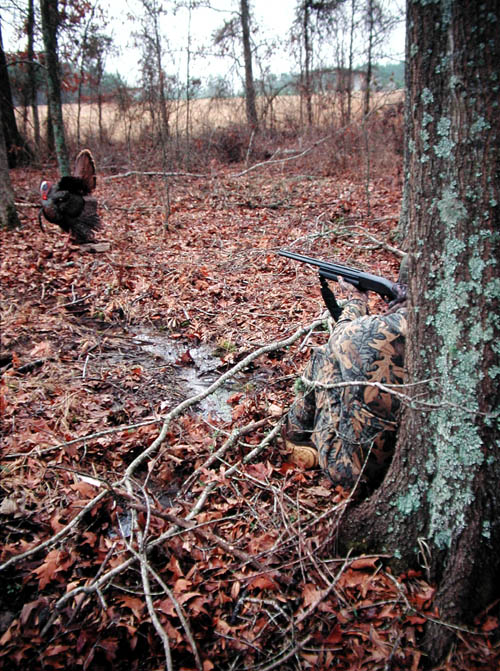 While
hunting in Missouri with three-time World Champion turkey caller, Don
Shipp of Arkansas, I had a gobbler strutting in the field at 40 yards.
"Do you think you can make the shot?" Shipp asked me. "Sure I can," I
said with a degree of confidence that came from years of bagging gobblers.
Steadying my shotgun, I waited for Shipp to make the gobbler stick up
his head with his calling. When the bird's neck was fully extended, I
aimed for the base of the wattles and squeezed the trigger. Much to my
surprise, the gobbler took to the air. As the bird started flying directly
toward us, I mounted my shotgun and tried to find the flying gobbler in
my scope. I saw feathers and squeezed the trigger, but once again I missed
the target. If I hadn't used my scope, I probably would've killed that
turkey. But I hadn't had to make a shot at a flying gobbler very often.
While
hunting in Missouri with three-time World Champion turkey caller, Don
Shipp of Arkansas, I had a gobbler strutting in the field at 40 yards.
"Do you think you can make the shot?" Shipp asked me. "Sure I can," I
said with a degree of confidence that came from years of bagging gobblers.
Steadying my shotgun, I waited for Shipp to make the gobbler stick up
his head with his calling. When the bird's neck was fully extended, I
aimed for the base of the wattles and squeezed the trigger. Much to my
surprise, the gobbler took to the air. As the bird started flying directly
toward us, I mounted my shotgun and tried to find the flying gobbler in
my scope. I saw feathers and squeezed the trigger, but once again I missed
the target. If I hadn't used my scope, I probably would've killed that
turkey. But I hadn't had to make a shot at a flying gobbler very often.
To learn more about John E. Phillips' turkey-hunting books that contain information and tips from the nation's top turkey hunters, click here.
TOMORROW: MISSING TWO GOBBLERS IN ONE DAY
Check back each day this week for more about REASONS WHY I MISS TURKEYS ...
Day 1 - The Almost-Perfect
Shot
Day 2 - The Canting Gobbler
Day 3 - Missing Two Gobblers in One Day
Day 4 - The Hale Fail Gobbler
Day 5 - Miss Of The Man-Eater