
|
Features
|
|
|
|
Books
|
|
|
|
Fun & Games
|
|
|
|
Contact Us
|
|
|
John's Journal... Entry 194, Day 1
HOW TO CALL TURKEYS LIKE A CHAMPION WITH CHRIS PARRISH
How to Reach the Roost
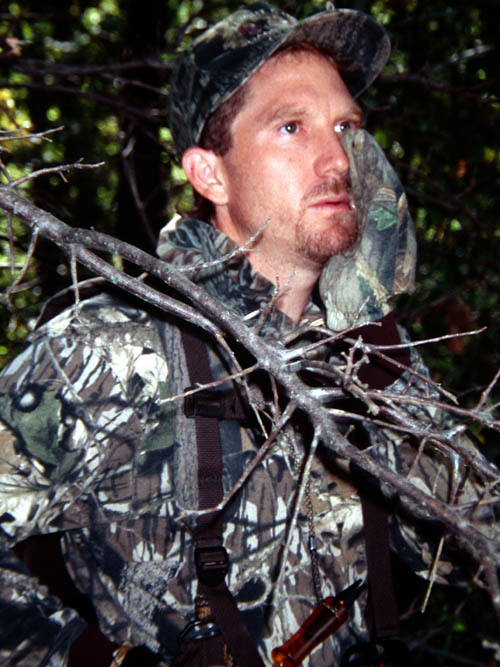 EDITOR'S
NOTE: Chris Parrish of Centralia, Missouri, a wild
turkey hunter for 24 years and the winner of five Grand National Turkey
Calling Championships, two Mid-American Turkey Calling Championships,
the U.S. Open and numerous regional and state titles, won the 2002 Mossy
Oak/World Turkey Calling Championship.
EDITOR'S
NOTE: Chris Parrish of Centralia, Missouri, a wild
turkey hunter for 24 years and the winner of five Grand National Turkey
Calling Championships, two Mid-American Turkey Calling Championships,
the U.S. Open and numerous regional and state titles, won the 2002 Mossy
Oak/World Turkey Calling Championship.
When I attend competitions and seminars, hunters ask me numerous questions about how to deal with certain turkey-hunting situations. I've learned one thing for certain -- turkey hunting holds no absolutes. The following tactics generally produce the most success for me when I deal with tough toms.
 QUESTION:
The turkey's on the roost -- now what?
QUESTION:
The turkey's on the roost -- now what?
ANSWER: To reach the turkey's roost location, you need to have scouted
the area before the season and/or have a TOPO map so you quickly and easily
can determine the lay of the land. Without knowing the land around where
you hear the turkey gobbling, you'll have a difficult time getting into
the right position to call that turkey. Once I know the terrain, I try
to get as close to the gobbling turkey as I can without his seeing me
to prevent any other hen from getting to that gobbler before he reaches
me. I don't want that turkey to have to come looking for me. When he pitches
off of the limb, I want him to sail right to me. When his feet hit the
ground, and he sticks his neck up to look for the hen, I want to take
him.
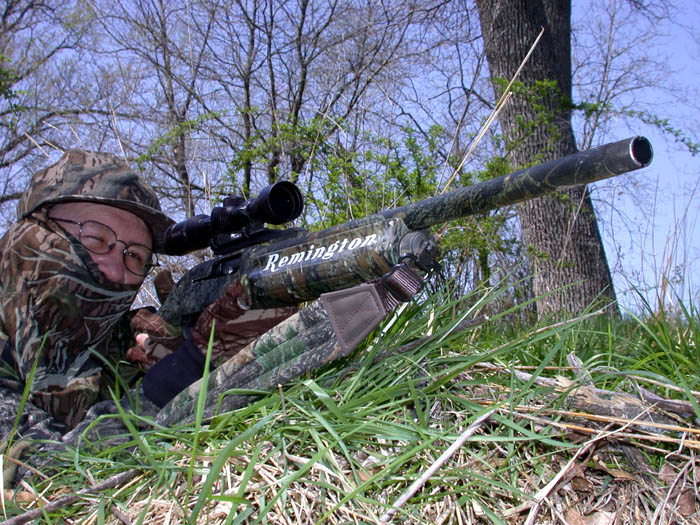 I
try to get within 75 to 150 yards of the roost tree before I call. If
the terrain will let me get within 50 yards of the roost tree, I'll move
in that close. Once I set up, put my gun on my knee and prepare to call,
I look for the turkey. If I can see the tom standing on the limb, I wait
until he looks away from my direction to give a call. I'll give two or
three short clucks and a couple of soft yelps. When you get that close
to a turkey, unless he has hens roosting with him, he'll almost always
fly down within gun range. Before I give those calls, I put my gun on
my knee and prepare to take the shot. Nine times out of 10 when I set
up that close to a turkey, and the gobbler hits the ground, I can squeeze
the trigger and take him.
I
try to get within 75 to 150 yards of the roost tree before I call. If
the terrain will let me get within 50 yards of the roost tree, I'll move
in that close. Once I set up, put my gun on my knee and prepare to call,
I look for the turkey. If I can see the tom standing on the limb, I wait
until he looks away from my direction to give a call. I'll give two or
three short clucks and a couple of soft yelps. When you get that close
to a turkey, unless he has hens roosting with him, he'll almost always
fly down within gun range. Before I give those calls, I put my gun on
my knee and prepare to take the shot. Nine times out of 10 when I set
up that close to a turkey, and the gobbler hits the ground, I can squeeze
the trigger and take him.
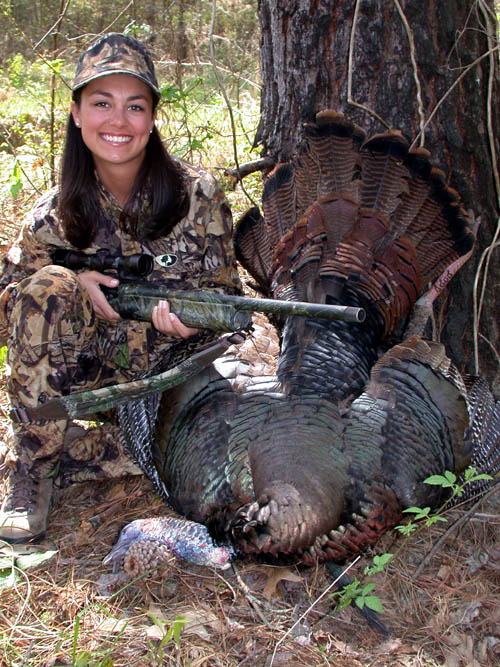 Many
turkey hunters have difficulty taking gobblers when they first fly-down
off of the roost. You'll have a difficult time taking a gobbler off the
roost if you don't get close enough to him so that he lands right in front
of you. I've had really good luck taking turkeys as soon as they fly-down
off the roost by getting really close to them.
Many
turkey hunters have difficulty taking gobblers when they first fly-down
off of the roost. You'll have a difficult time taking a gobbler off the
roost if you don't get close enough to him so that he lands right in front
of you. I've had really good luck taking turkeys as soon as they fly-down
off the roost by getting really close to them.
TOMORROW: HE'S OFF THE ROOST, NOW WHAT?
Check back each day this week for more about HOW TO CALL TURKEYS LIKE A CHAMPION WITH CHRIS PARRISH ...
Day 1 - How to Reach the
Roost
Day 2 - He's Off The Roost, Now What?
Day 3 - You're Missing The Boat
Day 4 - My One and Only
Day 5 - The Exception to the Rule