
|
Features
|
|
|
|
Books
|
|
|
|
Fun & Games
|
|
|
|
Contact Us
|
|
|
John's Journal... Entry 228, Day 3
HOW TO HUNT CLEAR CUTS
Hunt the Trash
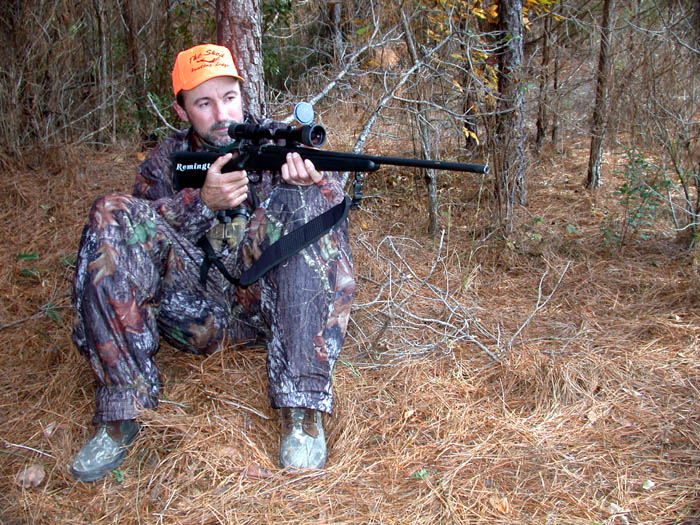 Editor's
Note: For most of their lives, Larry Norton of Pennington, Alabama, and
his cousin Ray Moseley either have been members of hunting clubs or operated
hunting clubs. In 2002, they decided to lease some property and allow
individuals to hunt on the property known as the Shed Hunting Lodge near
Butler in west/central Alabama. All this property lies on either private
or timber company lands, with the majority of the land clear cut. Most
deer hunters have difficulties hunting clear cuts and uneven-age-stand
plantations because they don't know the secrets for hunting these areas.
But the six hunters who hunted at the Shed last year all took deer, with
four of them harvesting bucks that scored 130 points or better on the
Boone & Crockett scale. This week, Larry Norton, who avidly hunts deer
for more than three months each year and is a World Champion turkey caller,
will tell you the secrets for hunting clear cuts and uneven-age pine stands.
Editor's
Note: For most of their lives, Larry Norton of Pennington, Alabama, and
his cousin Ray Moseley either have been members of hunting clubs or operated
hunting clubs. In 2002, they decided to lease some property and allow
individuals to hunt on the property known as the Shed Hunting Lodge near
Butler in west/central Alabama. All this property lies on either private
or timber company lands, with the majority of the land clear cut. Most
deer hunters have difficulties hunting clear cuts and uneven-age-stand
plantations because they don't know the secrets for hunting these areas.
But the six hunters who hunted at the Shed last year all took deer, with
four of them harvesting bucks that scored 130 points or better on the
Boone & Crockett scale. This week, Larry Norton, who avidly hunts deer
for more than three months each year and is a World Champion turkey caller,
will tell you the secrets for hunting clear cuts and uneven-age pine stands.
 *
Hunt trash piles. If you'll notice, after an area has been clear cut,
many timber companies will bulldoze up the stumps and the brush into a
long windrow that's often left out in the clear cut. As those young pines
grow up, those windrows begin to vanish from sight. I've found there will
usually be a deer trail that runs alongside the windrows as well as through
or over the windrows at a certain point inside the clear cut. These windrows
have extremely-fertile soil because the trees and bushes begin to rot.
Then greenbrier, blackberry and honeysuckle will grow along those old
windrows. For this reason, the area has an edge effect, because the windrows
often will be higher than the surrounding ground. These windrows also
provide a tremendous amount of food for the deer inside the pine plantation
and mean deer can feed and bed inside the pines and never expose themselves
to hunters. I've taken many a nice buck by setting up a ground blind inside
the pines near these trash piles.
*
Hunt trash piles. If you'll notice, after an area has been clear cut,
many timber companies will bulldoze up the stumps and the brush into a
long windrow that's often left out in the clear cut. As those young pines
grow up, those windrows begin to vanish from sight. I've found there will
usually be a deer trail that runs alongside the windrows as well as through
or over the windrows at a certain point inside the clear cut. These windrows
have extremely-fertile soil because the trees and bushes begin to rot.
Then greenbrier, blackberry and honeysuckle will grow along those old
windrows. For this reason, the area has an edge effect, because the windrows
often will be higher than the surrounding ground. These windrows also
provide a tremendous amount of food for the deer inside the pine plantation
and mean deer can feed and bed inside the pines and never expose themselves
to hunters. I've taken many a nice buck by setting up a ground blind inside
the pines near these trash piles.
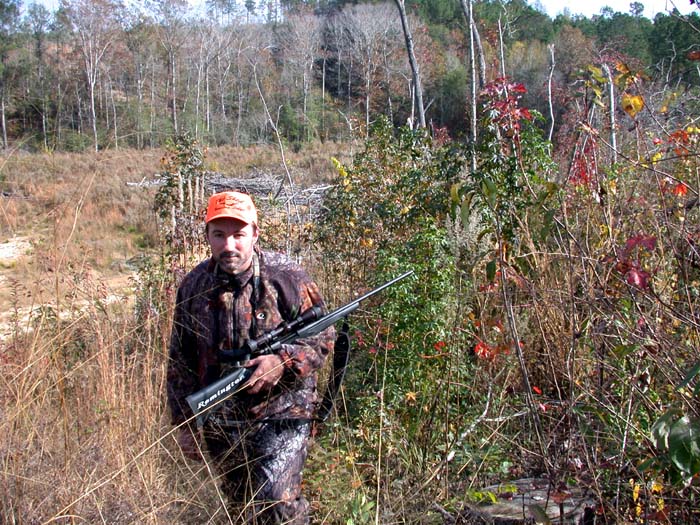 *
Look for deer in loading areas, where the timber companies load the pine
trees that they've thinned. These regions will also grow up in honeysuckle,
greenbrier and blackberry bushes as well as other grasses and forbs and
provide an excellent place to hunt. Beetle damage is a misery that timber
companies have to endure. When pine beetles begin to destroy trees in
a pine plantation, usually the timber company will go in and cut down
the beetle-damaged trees. If these trees are removed, that ground, often
in the middle of a pine plantation, will be opened up to sunlight and
provide a feeding station for deer.
*
Look for deer in loading areas, where the timber companies load the pine
trees that they've thinned. These regions will also grow up in honeysuckle,
greenbrier and blackberry bushes as well as other grasses and forbs and
provide an excellent place to hunt. Beetle damage is a misery that timber
companies have to endure. When pine beetles begin to destroy trees in
a pine plantation, usually the timber company will go in and cut down
the beetle-damaged trees. If these trees are removed, that ground, often
in the middle of a pine plantation, will be opened up to sunlight and
provide a feeding station for deer.
 *
Fertilize loading regions and those sections of land damaged by beetles.
The only way you find any of these deer-hunting hot spots is to go inside
the pine plantation and be aware of what's going on in there. Beetle-damage
regions and loading areas often make ideal places to plant green fields
and/or tiny green fields for bow hunting. Although most hunters think
of tree stands as either self climbers or lock-ons, here we use ladder
stands that we can lean up against young trees or tripod stands, when
we hunt inside the pine plantations. We also use a hand-fertilizing machine
to fertilize beetle-damaged areas and loading places to not only increase
the amount of browse, but also increase the nutritional level of the browse
as well. I also fertilize the trash piles inside the clear cuts.
*
Fertilize loading regions and those sections of land damaged by beetles.
The only way you find any of these deer-hunting hot spots is to go inside
the pine plantation and be aware of what's going on in there. Beetle-damage
regions and loading areas often make ideal places to plant green fields
and/or tiny green fields for bow hunting. Although most hunters think
of tree stands as either self climbers or lock-ons, here we use ladder
stands that we can lean up against young trees or tripod stands, when
we hunt inside the pine plantations. We also use a hand-fertilizing machine
to fertilize beetle-damaged areas and loading places to not only increase
the amount of browse, but also increase the nutritional level of the browse
as well. I also fertilize the trash piles inside the clear cuts.
* Walk them up. If the weather is hot, the deer will usually be holding in the bottom of a hollow. As the weather becomes colder, the deer will start moving up the mountain so they can get that early morning sun. Most of the time, if you're not making a lot of noise, are moving real slow and spook a buck, if that buck doesn't know exactly what you are, he'll only run 40 to 60 yards, stop and look back to see what you are. Then you can get a shot at them if the clear cut isn't too thick. This tactic is best to try on young pine stands so you can see the deer when they get up, and when they stop.
TOMORROW: DRIVE THEM OUT
Check back each day this week for more about HOW TO HUNT CLEAR CUTS ...
Day 1 - Why Hunt Clear Cuts
Day 2 - How Norton Hunts a Young Pine Plantation
Day 3 - Hunt the Trash
Day 4 - Drive Them Out
Day 5 - Get High During the Rut in a Young
Pine Plantation