
|
Features
|
|
|
|
Books
|
|
|
|
Fun & Games
|
|
|
|
Contact Us
|
|
|
John's Journal... Entry 234, Day 1
SMOKING EASTERN COYOTES
An Eastern Coyote Hunt
 Editor's
Note: If you want to experience fun, off-season hunting this spring and
summer, try hunting coyotes, abundant in most areas of the East. Very
few other hunters hunt coyotes, landowners will look forward to your hunting,
and they'll do all they can to aid your success.
Editor's
Note: If you want to experience fun, off-season hunting this spring and
summer, try hunting coyotes, abundant in most areas of the East. Very
few other hunters hunt coyotes, landowners will look forward to your hunting,
and they'll do all they can to aid your success.
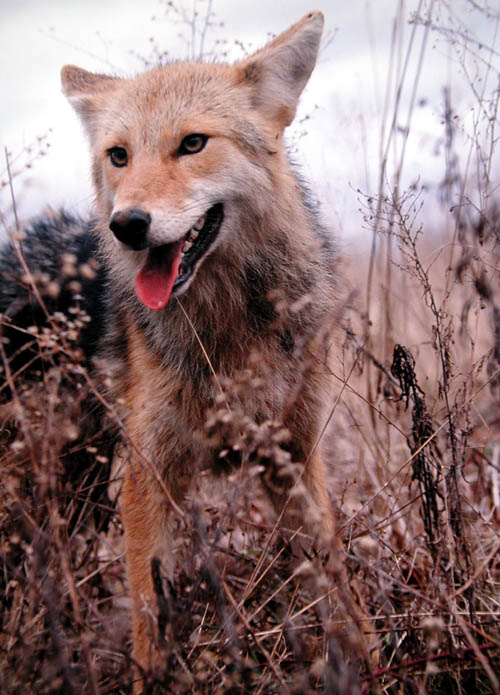
As the movie opens, on a small hill in the distance sits cowboy on his horse with its head down. Weary from the day, the cowboy slumps in the saddle awaiting the night and his watch over the herd of mooing cows. The camera pans the scene. Off in the distance, we hear the eerie sound of a howling coyote, head thrown back, silhouetted as the moon begins to rise. Many of us see this picture of cowboys in our minds when we think about the West. But in recent years, the wild canine of the plains has crossed into the Midwest. Today coyotes live throughout the East.
 One
morning as I hunted a southern swamp in the mist at first light, I spotted
movement about 50 yards from where I sat in his tree stand. With my binoculars,
I looked carefully in the direction where I'd seen the movement. When
the round circle of the binoculars overlapped the side of a wide oak tree,
I spotted the movement again. This time I could distinguish the inside
white of a deer's ear as it twitched nervously, shooing mosquitoes and
straining to hear every sound in the woods. The deer took two steps forward
and then looked intently behind itself. In the stillness of the morning,
I saw a second deer, a small spotted fawn, move close to his mother. A
fox squirrel barking in the distance and then the doe and fawn breaking
and running less than 20 yards from my stand disturbed the stillness and
beauty of the scene. I next heard a rustling in the leaves coming from
the direction where I'd first spotted the doe. Anticipating the opportunity
to take a trophy buck, I went ahead and cocked the hammer on my .50-caliber
black-powder rifle.
One
morning as I hunted a southern swamp in the mist at first light, I spotted
movement about 50 yards from where I sat in his tree stand. With my binoculars,
I looked carefully in the direction where I'd seen the movement. When
the round circle of the binoculars overlapped the side of a wide oak tree,
I spotted the movement again. This time I could distinguish the inside
white of a deer's ear as it twitched nervously, shooing mosquitoes and
straining to hear every sound in the woods. The deer took two steps forward
and then looked intently behind itself. In the stillness of the morning,
I saw a second deer, a small spotted fawn, move close to his mother. A
fox squirrel barking in the distance and then the doe and fawn breaking
and running less than 20 yards from my stand disturbed the stillness and
beauty of the scene. I next heard a rustling in the leaves coming from
the direction where I'd first spotted the doe. Anticipating the opportunity
to take a trophy buck, I went ahead and cocked the hammer on my .50-caliber
black-powder rifle.
 As
the sound grew louder and the animal moved closer, I failed to see the
straight vertical line about 3 feet off the ground that would indicate
the deer's back. Nor did I spot the long, sharp, pointed nose and slick
head of a doe. I knew I could see easier if I moved from where the sound
came. As I looked closely with my binoculars, I spotted a black shadow
sneaking across the forest floor as the animal hugged the ground and stalked
the doe and fawn I'd just seen. As the critter stood 50 yards away, I
saw the sharp, pointed ears and the thick-haired fur tail of a black-color-phase
coyote. The rays of the sun danced through its black coat.
As
the sound grew louder and the animal moved closer, I failed to see the
straight vertical line about 3 feet off the ground that would indicate
the deer's back. Nor did I spot the long, sharp, pointed nose and slick
head of a doe. I knew I could see easier if I moved from where the sound
came. As I looked closely with my binoculars, I spotted a black shadow
sneaking across the forest floor as the animal hugged the ground and stalked
the doe and fawn I'd just seen. As the critter stood 50 yards away, I
saw the sharp, pointed ears and the thick-haired fur tail of a black-color-phase
coyote. The rays of the sun danced through its black coat.
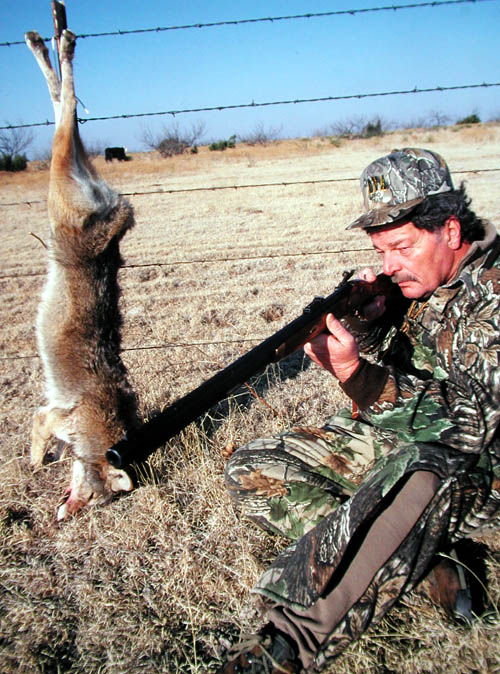
While preparing for the shot, I knew I possibly could save the fawn and a large number of turkeys and quail this coyote would eat if I bagged the coyote. When the black canine came to the log the doe and the fawn had jumped over, the coyote put its two front feet on the log. He looked about intently for his prey. With the front sight level with the rear sight on my rifle, I steadied my aim on the coyote's shoulder. Then I squeezed the trigger, and the coyote tumbled. I now had taken three coyotes in three years while deer hunting at White Oak Plantation near Tuskegee, Alabama.
TOMORROW: THE HISTORY OF EASTERN COYOTES AND THEIR RAPID INCREASE
Check back each day this week for more about SMOKING EASTERN COYOTES ...
Day 1 - An Eastern Coyote
Hunt
Day 2 - The History Of Eastern Coyotes And
Their Rapid Increase
Day 3 - Where To Find Coyotes To Hunt
Day 4 - What Calls Work Best On Coyotes
Day 5 - How To Hunt Coyotes