
|
Features
|
|
|
|
Books
|
|
|
|
Fun & Games
|
|
|
|
Contact Us
|
|
|
John's Journal... Entry 234, Day 4
SMOKING EASTERN COYOTES
What Calls Work Best On Coyotes
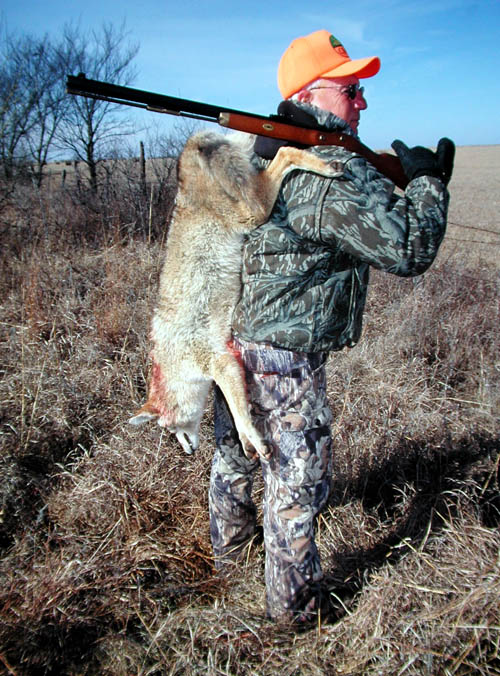 Editor's
Note: If you want to experience fun, off-season hunting this spring and
summer, try hunting coyotes, abundant in most areas of the East. Very
few other hunters hunt coyotes, landowners will look forward to your hunting,
and they'll do all they can to aid your success.
Editor's
Note: If you want to experience fun, off-season hunting this spring and
summer, try hunting coyotes, abundant in most areas of the East. Very
few other hunters hunt coyotes, landowners will look forward to your hunting,
and they'll do all they can to aid your success.
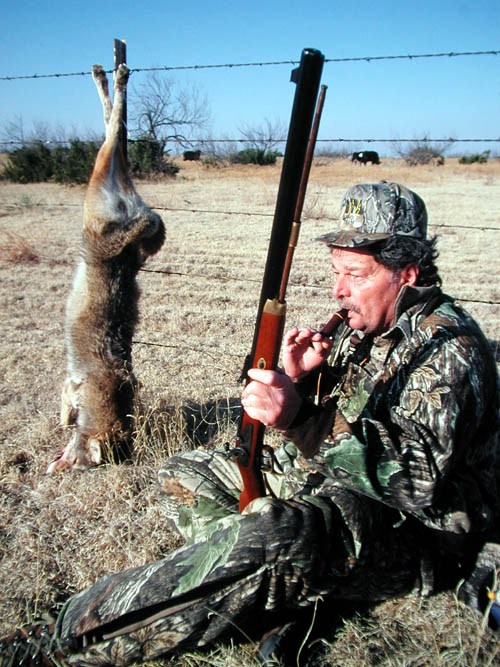
Most hunters use the traditional injured-rabbit call for coyote hunting. One of the coyote's main food sources includes rabbits. When a coyote hears the sound of a rabbit in distress, it generally will come to investigate if not to feed. A hunter who doesn't blow the rabbit call from his diaphragm as he will a turkey call, a goose call or a duck call but instead blows it with his mouth won't experience as much success calling in coyotes. Also the hunter must understand the rhythm required to produce a life-like sound on a rabbit call. Because a rabbit has very small lungs, its ability to produce sounds decreases quickly. The first burst of air a rabbit uses to squeal will sound the loudest of any squeals it makes during its series. As the rabbit runs out of air, the volume will decrease. Usually a rabbit will wait a few seconds to refill its lungs with air before it begins to squeal again. Most coyote hunters suggest blowing an injured-rabbit call with short, quick bursts of air and reducing the volume with each call.
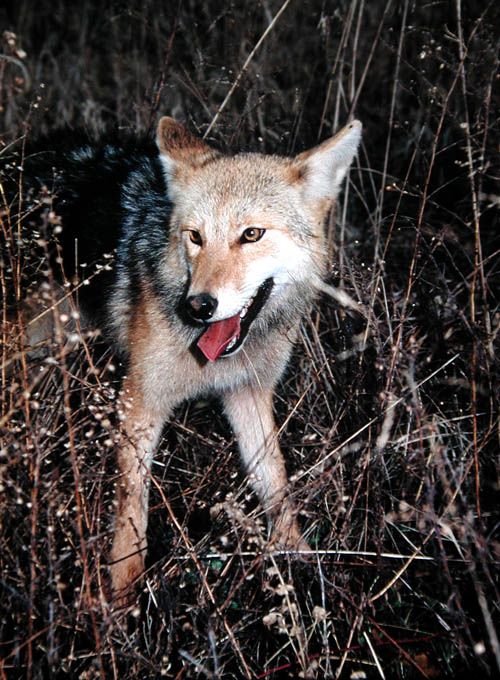 When
coyotes start to get within range, stop blowing the dying-rabbit call.
Instead use a mouse squeaker, a small, subtle-sounding call you can operate
with a minimum of movement that quietly attracts a coyote at close range.
Also the highly-effective coyote howler will call in and locate songdogs.
In the spring of the year, coyotes often will answer a howler when the
males look for females. In the fall, coyotes will answer a howler because
often they tend to pack together more to hunt at that time of year. Also
coyotes will respond to a howler because the howler sounds like a new
animal has entered their territory. Many knowledgeable hunters believe
that coyotes recognize each other's bark and howl. When coyotes hear a
new call, they'll answer back to try to find the new animal in their region.
When
coyotes start to get within range, stop blowing the dying-rabbit call.
Instead use a mouse squeaker, a small, subtle-sounding call you can operate
with a minimum of movement that quietly attracts a coyote at close range.
Also the highly-effective coyote howler will call in and locate songdogs.
In the spring of the year, coyotes often will answer a howler when the
males look for females. In the fall, coyotes will answer a howler because
often they tend to pack together more to hunt at that time of year. Also
coyotes will respond to a howler because the howler sounds like a new
animal has entered their territory. Many knowledgeable hunters believe
that coyotes recognize each other's bark and howl. When coyotes hear a
new call, they'll answer back to try to find the new animal in their region.
 Other
outdoorsmen believe a howler may simulate the barking a coyote makes when
it discovers its prey and wants to call other coyotes in for the kill.
Teaching anyone to use a howler presents problems. As with any other type
of calling, most hunters tend to overcall and call too loudly. The terrain
dictates the volume. If you hunt in wide, open spaces where you can see
for 150 to 300 yards in all directions, then you'll have to call loudly
to reach a coyote hiding in thick cover just out of sight. However, if
you only have 100 yards or less visibility, you'll find soft calling more
effective. But coyotes will not always bark or howl back to a howler before
they come in to where the hunter sits. A coyote may hear the call and
come sneaking in without ever making a sound.
Other
outdoorsmen believe a howler may simulate the barking a coyote makes when
it discovers its prey and wants to call other coyotes in for the kill.
Teaching anyone to use a howler presents problems. As with any other type
of calling, most hunters tend to overcall and call too loudly. The terrain
dictates the volume. If you hunt in wide, open spaces where you can see
for 150 to 300 yards in all directions, then you'll have to call loudly
to reach a coyote hiding in thick cover just out of sight. However, if
you only have 100 yards or less visibility, you'll find soft calling more
effective. But coyotes will not always bark or howl back to a howler before
they come in to where the hunter sits. A coyote may hear the call and
come sneaking in without ever making a sound.
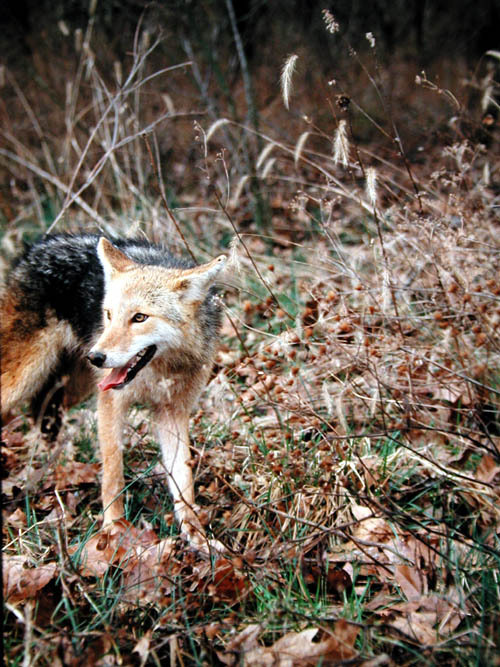 Some
call companies make a canine whiner you can use to bark and howl too.
However, you primarily want to imitate a coyote pup in distress with the
canine whiner. This call will trigger a female coyote's mothering instincts
to come and investigate why the pup whines and also will cause a male
dog to come in to protect the litter. A canine whiner particularly will
lure in coyote pups in a pack. Hunters also mention that some coyotes
will eat puppies from rival family groups. Often a coyote hunter mistakenly
leaves his calling spot before the coyote comes into view. To successfully
bag coyotes, give three barks and a howl on a coyote howler. Wait for
five minutes, and then repeat the call. If you don't spot a coyote, then
give either a canine-whiner call or an injured-rabbit call. If you fail
to see an animal after 45 minutes, move from 1/2 to 3/4 mile before trying
to call again.
Some
call companies make a canine whiner you can use to bark and howl too.
However, you primarily want to imitate a coyote pup in distress with the
canine whiner. This call will trigger a female coyote's mothering instincts
to come and investigate why the pup whines and also will cause a male
dog to come in to protect the litter. A canine whiner particularly will
lure in coyote pups in a pack. Hunters also mention that some coyotes
will eat puppies from rival family groups. Often a coyote hunter mistakenly
leaves his calling spot before the coyote comes into view. To successfully
bag coyotes, give three barks and a howl on a coyote howler. Wait for
five minutes, and then repeat the call. If you don't spot a coyote, then
give either a canine-whiner call or an injured-rabbit call. If you fail
to see an animal after 45 minutes, move from 1/2 to 3/4 mile before trying
to call again.
TOMORROW: HOW TO HUNT COYOTES
Check back each day this week for more about SMOKING EASTERN COYOTES ...
Day 1 - An Eastern Coyote
Hunt
Day 2 - The History Of Eastern Coyotes And
Their Rapid Increase
Day 3 - Where To Find Coyotes To Hunt
Day 4 - What Calls Work Best On Coyotes
Day 5 - How To Hunt Coyotes