
|
Features
|
|
|
|
Books
|
|
|
|
Fun & Games
|
|
|
|
Contact Us
|
|
|
John's Journal... Entry 244, Day 1
HUNTING GOBBLERS IN ANY WEATHER
Rain And Doug Camp
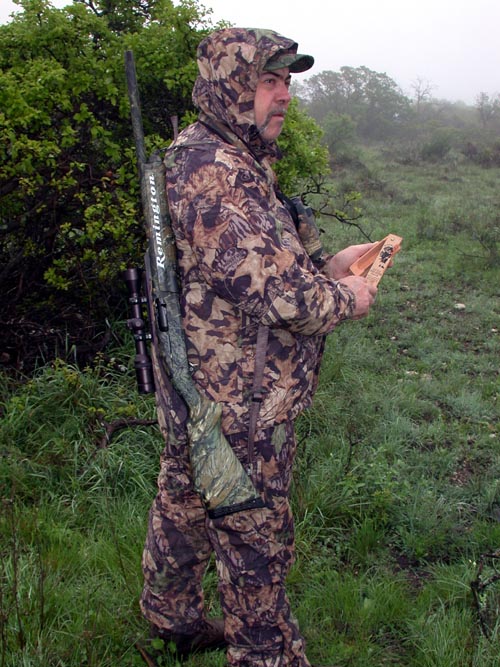 Editor's
Note: The rain beat on the tin roof of the camphouse like machine gunfire.
I couldn't believe the rain pouring down on this opening morning of turkey
season. But because my friend Don Taylor of Birmingham, Alabama, and I
wouldn't miss hunting on opening morning, regardless of the weather, we
braved the windy and wet weather outside. Finally at 11:00 a.m., after
rain had soaked me from the tip of my head to the soles of my feet, we
found a lonesome gobbler in a cow pasture and called him in to the gun.
I prefer not to hunt in the rain, wind or snow or under drought conditions,
but like most hunters, I have to hunt when I get the opportunity, whether
the weather conditions favor hunting or not. Often, I'll get a dose of
bad weather on many of the turkey hunts I go on each spring. I always
carry an extra bag with me with raingear, snowsuits and suntan lotion,
because I've learned through the years that bad weather follows me wherever
I hunt. This week, some turkey hunters who take toms under good and bad
weather conditions will tell us their tactics for taking birds in any
weather.
Editor's
Note: The rain beat on the tin roof of the camphouse like machine gunfire.
I couldn't believe the rain pouring down on this opening morning of turkey
season. But because my friend Don Taylor of Birmingham, Alabama, and I
wouldn't miss hunting on opening morning, regardless of the weather, we
braved the windy and wet weather outside. Finally at 11:00 a.m., after
rain had soaked me from the tip of my head to the soles of my feet, we
found a lonesome gobbler in a cow pasture and called him in to the gun.
I prefer not to hunt in the rain, wind or snow or under drought conditions,
but like most hunters, I have to hunt when I get the opportunity, whether
the weather conditions favor hunting or not. Often, I'll get a dose of
bad weather on many of the turkey hunts I go on each spring. I always
carry an extra bag with me with raingear, snowsuits and suntan lotion,
because I've learned through the years that bad weather follows me wherever
I hunt. This week, some turkey hunters who take toms under good and bad
weather conditions will tell us their tactics for taking birds in any
weather.
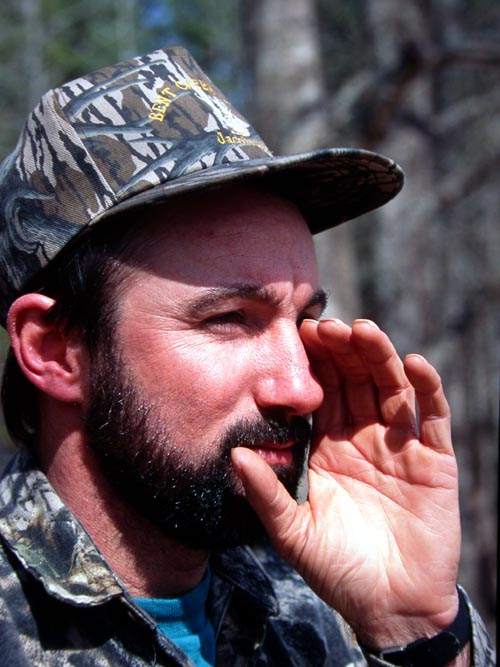
 Doug
Camp of Talledega, Alabama, manufactures a line of handcrafted custom
calls known as Camp's Callers. Camp hunts every day of turkey season,
often in several states, and has kept up this pace for more than 35 years.
His experience has taught him that if you turkey hunt every day, you'll
have to know how to hunt in the rain. "I've learned when the rain is coming
down so hard you can't hear, and all the animals and birds have gone under
some type of cover to stay dry, I better take cover, too," Camp says.
"When I was younger and dumber, I'd hunt all day in a driving rain. But
I've stopped doing that because I've found it's not productive. However,
I will hunt all day in a drizzling or an intermittent rain. As long as
the rain doesn't pour down in buckets, turkeys will go to open areas.
I think turkeys go to these open places to spot danger from greater distances
since they can't hear in bad-weather conditions. So during a rain, I'll
look for turkeys along roads and old logging ramps and in pastures and
fields. If the rainfall is really heavy, the gobblers will move out of
the field to the edge of the field and search for some type of heavy cover
to get under. But as long as the rain doesn't come down too hard, the
birds will stay in the fields.
Doug
Camp of Talledega, Alabama, manufactures a line of handcrafted custom
calls known as Camp's Callers. Camp hunts every day of turkey season,
often in several states, and has kept up this pace for more than 35 years.
His experience has taught him that if you turkey hunt every day, you'll
have to know how to hunt in the rain. "I've learned when the rain is coming
down so hard you can't hear, and all the animals and birds have gone under
some type of cover to stay dry, I better take cover, too," Camp says.
"When I was younger and dumber, I'd hunt all day in a driving rain. But
I've stopped doing that because I've found it's not productive. However,
I will hunt all day in a drizzling or an intermittent rain. As long as
the rain doesn't pour down in buckets, turkeys will go to open areas.
I think turkeys go to these open places to spot danger from greater distances
since they can't hear in bad-weather conditions. So during a rain, I'll
look for turkeys along roads and old logging ramps and in pastures and
fields. If the rainfall is really heavy, the gobblers will move out of
the field to the edge of the field and search for some type of heavy cover
to get under. But as long as the rain doesn't come down too hard, the
birds will stay in the fields.
 "Most
of the times when you see a gobbler with hens, the gobbler will strut,
and the hens will peck and feed. As long as the hens feed and the gobbler
struts, you'll have a very slim chance of calling to this bird. But at
some point, the hens and the gobblers will decide to leave the field.
The hens usually will stick their heads up and start looking around for
a minute or so. Then they'll walk out of the field. That's when you often
can call the gobbler and some of the hens to you. In a big field that
has enough cover for you to get around the field and ahead of the turkeys,
many times you can let the birds walk right to you as they move out of
the field. Remember not to move if you know the turkeys can see you. Many
hunters make the mistake of getting too close to the turkeys during the
rain and spooking the birds they may have taken on another day. Just because
the rain's coming down, you're not invisible. The turkeys still can spot
you. If you spook a turkey, you're less likely to take him whether it's
raining or not.
"Most
of the times when you see a gobbler with hens, the gobbler will strut,
and the hens will peck and feed. As long as the hens feed and the gobbler
struts, you'll have a very slim chance of calling to this bird. But at
some point, the hens and the gobblers will decide to leave the field.
The hens usually will stick their heads up and start looking around for
a minute or so. Then they'll walk out of the field. That's when you often
can call the gobbler and some of the hens to you. In a big field that
has enough cover for you to get around the field and ahead of the turkeys,
many times you can let the birds walk right to you as they move out of
the field. Remember not to move if you know the turkeys can see you. Many
hunters make the mistake of getting too close to the turkeys during the
rain and spooking the birds they may have taken on another day. Just because
the rain's coming down, you're not invisible. The turkeys still can spot
you. If you spook a turkey, you're less likely to take him whether it's
raining or not.
 "I
hunt defensively on rainy days. I try not to spook turkeys I can hunt
later on a pretty day. To take turkeys on rainy days, you must go to an
open place where you've seen turkeys before and sit there until a gobbler
shows up. If you walk through the woods and try to call the turkeys, you'll
spook more gobblers than you'll take. Sitting in the rain on the edge
of an empty field and waiting for a gobbler to come to you may not sound
like a fun day of hunting, but you'll have the best chance of taking a
turkey on a rainy day."
"I
hunt defensively on rainy days. I try not to spook turkeys I can hunt
later on a pretty day. To take turkeys on rainy days, you must go to an
open place where you've seen turkeys before and sit there until a gobbler
shows up. If you walk through the woods and try to call the turkeys, you'll
spook more gobblers than you'll take. Sitting in the rain on the edge
of an empty field and waiting for a gobbler to come to you may not sound
like a fun day of hunting, but you'll have the best chance of taking a
turkey on a rainy day."
TOMORROW: LARRY NORTON AND THE WIND
Check back each day this week for more about HUNTING GOBBLERS IN ANY WEATHER ...
Day 1 - Rain And Doug Camp
Day 2 - Larry Norton And The Wind
Day 3 - Snow Gobblers And Bob Wozniak
Day 4 - Steve Stoltz On Hot-Weather Toms
Day 5 - Steve Stoltz On Warm-Weather Toms,
Part 2