
|
Features
|
|
|
|
Books
|
|
|
|
Fun & Games
|
|
|
|
Contact Us
|
|
|
John's Journal... Entry 105, Day 2
HOW TO KEEP THE HUNT OF A LIFETIME
What's The Best Equipment For Better Video?
 EDITOR'S
NOTE: We don't have to depend on our memories to relive the best hunts
of our lifetimes. Modern technology enables us to capture the essence
of great hunts, good hunts and even enjoyable, non-productive hunts through
video. But how do you film your hunt and try to take game at the same
time? Which cameras will serve you best? What's the best technique for
getting top-notch footage? Where and how can you get a hunting buddy to
shoot footage for you instead of trying to take a deer or a turkey for
himself? Can you make a living shooting hunting videos? To learn the answers
to these questions and more, we've interviewed some of the best videographers
in the outdoor industry. These people use video cameras to tape television
shows and to create the best-selling videos in the nation. Follow their
advice to make the kind of videos your friends will lean out of their
chairs to watch instead of nodding off to sleep when you turn on the VCR.
EDITOR'S
NOTE: We don't have to depend on our memories to relive the best hunts
of our lifetimes. Modern technology enables us to capture the essence
of great hunts, good hunts and even enjoyable, non-productive hunts through
video. But how do you film your hunt and try to take game at the same
time? Which cameras will serve you best? What's the best technique for
getting top-notch footage? Where and how can you get a hunting buddy to
shoot footage for you instead of trying to take a deer or a turkey for
himself? Can you make a living shooting hunting videos? To learn the answers
to these questions and more, we've interviewed some of the best videographers
in the outdoor industry. These people use video cameras to tape television
shows and to create the best-selling videos in the nation. Follow their
advice to make the kind of videos your friends will lean out of their
chairs to watch instead of nodding off to sleep when you turn on the VCR.
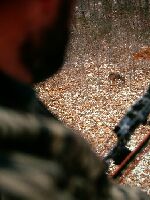 A
seasoned veteran in the outdoor video business, Michael Waddell of Columbus,
Georgia, helps to produce Realtree Outdoors television shows and the "Monster
Bucks" video series by Realtree. Waddell worked as a videographer
before he became an on-camera personality and a behind-the-scenes producer.
Today he shoots much of the raw footage for both the videos and the television
shows.
A
seasoned veteran in the outdoor video business, Michael Waddell of Columbus,
Georgia, helps to produce Realtree Outdoors television shows and the "Monster
Bucks" video series by Realtree. Waddell worked as a videographer
before he became an on-camera personality and a behind-the-scenes producer.
Today he shoots much of the raw footage for both the videos and the television
shows.
Waddell recommends DVD-formatted cameras for amateur videographers. "These
new cameras are taking the market by storm, and you can purchase them
at Circuit City or any other retailer who sells video equipment,"
explains Waddell. "I like the compact Sony DRVT 900 model cameras.
You can purchase 60-minute tapes for this camera that has digital audio
and video."
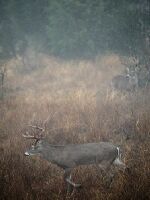 Waddell
also suggests that you buy a camera with a steady-cam feature. "This
device steadies your footage while you video and helps to eliminate camera
shake. Always use a video tripod or treepod when shooting from a stationary
platform; however, this steady-cam feature also will dramatically improve
the quality of a video when you have to hold the camera in your hand and
can't use a tripod.
Waddell
also suggests that you buy a camera with a steady-cam feature. "This
device steadies your footage while you video and helps to eliminate camera
shake. Always use a video tripod or treepod when shooting from a stationary
platform; however, this steady-cam feature also will dramatically improve
the quality of a video when you have to hold the camera in your hand and
can't use a tripod.
"We at Realtree have recognized that more hunters are taking video
cameras into the woods to record their hunts. For this reason, we're bringing
a new product to the market known as the Treehawk. This device, which
screws into the tree and can be used to mount your camera while you're
in a tree stand, is sold at local sporting-goods dealer or on Realtree's
website."
How To Shoot Better Video
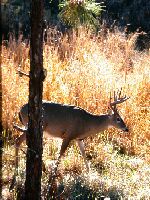 Have
you ever watched a home hunting video with a buddy and had your friend
say, "You see that crooked limb coming out from that giant water
oak? Well, you can't see him, but a monster buck is standing under that
limb." Then you ask yourself, "Why am I watching this video
if I can't see the monster buck my buddy's been bragging about?"
Home videographers often find that deer move the most when they don't
have enough light to shoot quality video. Or, they may shoot in bad light,
and no one can see what's on the video. To solve this problem, Waddell
suggests setting your tree stand so that you have the sun at your back
whenever possible. This setup provides maximum light to shoot low-light
hunts, since you won't have another light source other than the sun. To
achieve a well-lit video, you must have ample sunlight on your subjects-both
the hunter and the deer.
Have
you ever watched a home hunting video with a buddy and had your friend
say, "You see that crooked limb coming out from that giant water
oak? Well, you can't see him, but a monster buck is standing under that
limb." Then you ask yourself, "Why am I watching this video
if I can't see the monster buck my buddy's been bragging about?"
Home videographers often find that deer move the most when they don't
have enough light to shoot quality video. Or, they may shoot in bad light,
and no one can see what's on the video. To solve this problem, Waddell
suggests setting your tree stand so that you have the sun at your back
whenever possible. This setup provides maximum light to shoot low-light
hunts, since you won't have another light source other than the sun. To
achieve a well-lit video, you must have ample sunlight on your subjects-both
the hunter and the deer.
Waddell also recommends you pinpoint the spot in the woods that combines
peak light with buck appearance. Oftentimes a buck may stop in an opening
on his way to and from primary feeding areas like greenfields or agricultural
fields. Also, Waddell reminds videographers that if you have the sun shining
in front of you or straight at you, zoom in as tightly as possible on
the deer to minimize lens glare on your video
TOMORROW: HOW TO DECIDE WHO GETS TO HUNT AND WHO GETS
TOVIDEO AND MAKE MONEY
Check back each day this week for more about Videoing Hunts...
Day 1 -HOW TO KEEP THE HUNT
OF A LIFETIME
Day 2 -WHAT'S THE BEST EQUIPMENT FOR BETTER
VIDEO?
Day 3 -HOW TO DECIDE WHO GETS TO HUNT AND
WHO GETS TO VIDEO AND MAKE MONEY
Day 4 -WHAT'S THE TOUGHEST AND EASIEST HUNTS
TO VIDEO
Day 5 -TOP 15 SECRETS OF VIDEOGRAPHERS TO
GET GREAT HUNTING