
|
Features
|
|
|
|
Books
|
|
|
|
Fun & Games
|
|
|
|
Contact Us
|
|
|
Night Hawk Stories... Entry 24
Making the Shot
 EDITOR'S
NOTE: The winged warriors from hell, also known as mourning doves, streak
across the fall sky like World War II Kamikaze pilots. Their ability to
dive, pitch and roll will challenge the skills of even the best wing shooters
like the ones who work at Mossy Oak in West Point, Mississippi.
EDITOR'S
NOTE: The winged warriors from hell, also known as mourning doves, streak
across the fall sky like World War II Kamikaze pilots. Their ability to
dive, pitch and roll will challenge the skills of even the best wing shooters
like the ones who work at Mossy Oak in West Point, Mississippi.
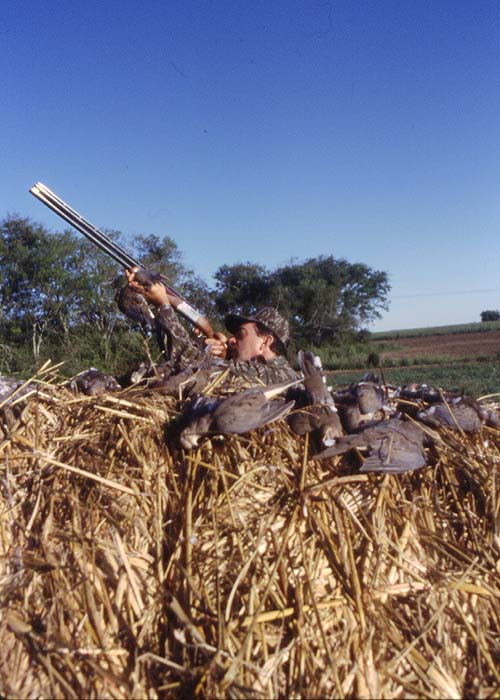
* Guns, Shells and Chokes -- Many hunters choose to shoot modified chokes when they hunt doves. Because most of the time the doves will fly at 40 yards or less when they come in, this choke not only provides maximum range for long shots but also offers plenty of shot pattern at the closer yardages.
If you shoot a full choke for doves, this choke can help you take birds out to 45 yards and more. But often you'll find the choke so tight you may miss the birds that come in close. The improved cylinder choke will bag birds at 30 to 35 yards. However, your long-range pattern becomes too loose to ensure that you successfully can down a bird.
 "I
use Winchester XX trap and skeet loads," Jim Porter who works at Mossy
Oak in West Point, Mississippi, reported. "Most dove hunters will buy
the cheapest shells they can find. Then they can't understand why they
don't consistently down doves. But by paying $1 a box more for quality
trap and skeet loads, you'll have shells that produce more dense and uniform
patterns. These shells also will allow you to take more birds at greater
ranges."
"I
use Winchester XX trap and skeet loads," Jim Porter who works at Mossy
Oak in West Point, Mississippi, reported. "Most dove hunters will buy
the cheapest shells they can find. Then they can't understand why they
don't consistently down doves. But by paying $1 a box more for quality
trap and skeet loads, you'll have shells that produce more dense and uniform
patterns. These shells also will allow you to take more birds at greater
ranges."
Generally, the better grades of shells produce more doves with fewer shots. Porter prefers to shoot the Winchester Super Light trap load, a 3-dram powder equivalent to 1 1/8-ounces of No. 7 1/2-shot. He finds the No. 7 1/2s more effective at long range than No. 8 shot.
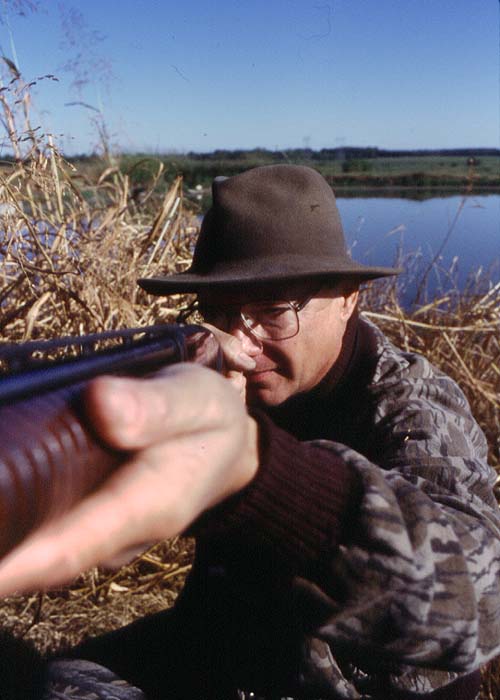
* Proper Gun Position -- To shoot accurately, keep your eyes as level as possible. Simply raising your eyebrows up on one side of your face will cause you to shoot incorrectly. When you bring the gun to your shoulder, your arm will make a pocket in your shoulder for the gun to fit in naturally. Once you position your gun correctly in the pocket of your shoulder, then lay your cheek down on the stock to see and aim properly. You'll never have a blue-and-black shoulder or arm from the recoil of a gun if you mount the gun properly.
* The Best Lead -- Most dove hunters use two types of leads. With the sustained lead, you hold your barrel out in front of the bird during the aiming process. When you see proper distance between the end of the barrel and the dove, then you pull the trigger. Or, some hunters prefer the swing-through method. Tony Rosetti of West Point, Mississippi, an award-winning trap-and-skeet shooter enjoys wearing Mossy Oak camouflage, recommends that you lead the birds by "using the swing-through method of shooting. I get on the bird as I look down the barrel of my shotgun. Then I come from behind the bird and squeeze the trigger, just as I pass the bird. I continue to swing the barrel of the gun as I follow through the shot, just like a golfer continues his swing after he hits the ball. I believe this provides a better method of aiming than using a sustained lead like many hunters do."
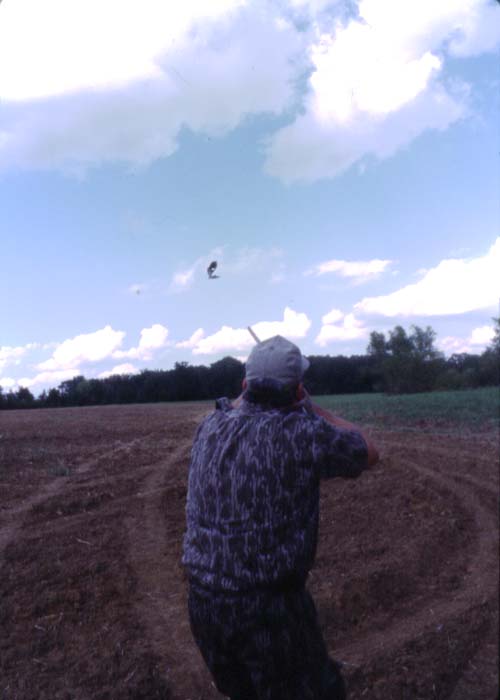 To
determine your lead, note how strong the wind blows, how fast the dove
flies, whether or not the bird flies with or against the wind and the
distance between you and the dove. Generally, if you attempt to bag a
dove from 25 to 30 yards, then you need to lead the bird by 3 to 4 feet.
To learn to use a 4-foot lead, try this. Put two sticks on the ground
4 feet apart. Aim at the first stick while looking at the second stick
to help your brain and eyes determine what a 4-foot lead looks like.
To
determine your lead, note how strong the wind blows, how fast the dove
flies, whether or not the bird flies with or against the wind and the
distance between you and the dove. Generally, if you attempt to bag a
dove from 25 to 30 yards, then you need to lead the bird by 3 to 4 feet.
To learn to use a 4-foot lead, try this. Put two sticks on the ground
4 feet apart. Aim at the first stick while looking at the second stick
to help your brain and eyes determine what a 4-foot lead looks like.
Even if you use the best shells, gun, and chokes, you still may miss doves. Wing-shooting instructors can analyze why you shoot in front of the bird or behind targets and can teach you the proper shooting position to mount the gun and position your head. Even raising your head up only a half-inch above the rib on the barrel can cause you to shoot 3-feet high.
* When to Shoot -- Often a hunter waits until a dove riding the wind flies right on top of him before taking the shot. Because the hunter's shot will have a tight pattern, the dove can dodge it more easily. Instead, try to bag a dove 20 to 30 yards out in front of you to allow your shot pattern to open up.
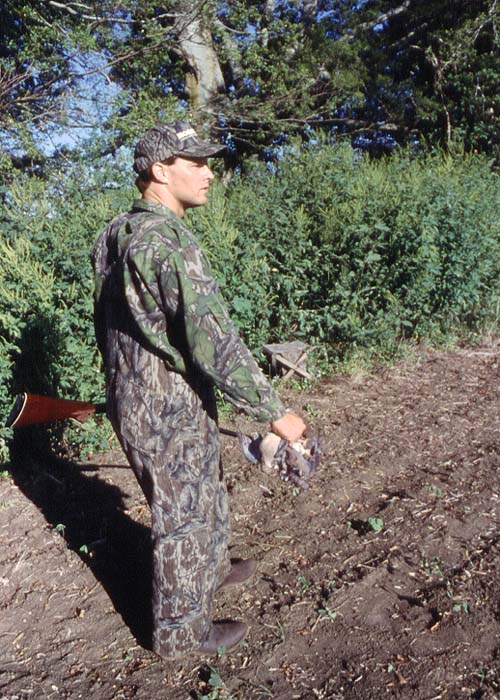 Get
into the proper shooting position before you squeeze the trigger. Then
if the zigging-and-zagging bird does start to dip to the left or to the
right, you may have time to compensate for the dove's movement if it gets
farther out in front of you instead of straight up over your head.
Get
into the proper shooting position before you squeeze the trigger. Then
if the zigging-and-zagging bird does start to dip to the left or to the
right, you may have time to compensate for the dove's movement if it gets
farther out in front of you instead of straight up over your head.
* How to Take a Follow-Up Shot -- After you've shot and missed a dove, forget about the first shot, and concentrate on the second shot. Make sure you still have your cheek against the stock. Swing your barrel out in front of the bird before you squeeze the trigger, and don't rush the shot. To really enjoy the sport of dove hunting, carefully consider the equipment you'll use, the birds' habits and haunts and the techniques you'll use to take them. Remember, the more you learn about doves and shooting, the more birds you'll bag on each outing.
Tomorrow: Dove Shooting Strategies and Situations
Entry 21-Where and How to Find
Doves
Entry 22-Dove Hunting Accessories
Entry 23-Dove Decoys and Calls
Entry 24-Making the Shot
Entry 25-Dove Shooting Strategies and Situations