
|
Features
|
|
|
|
Books
|
|
|
|
Fun & Games
|
|
|
|
Contact Us
|
|
|
John's Journal... Entry 130, Day 3
THE SUPER GENE
What Is A Trophy Buck?
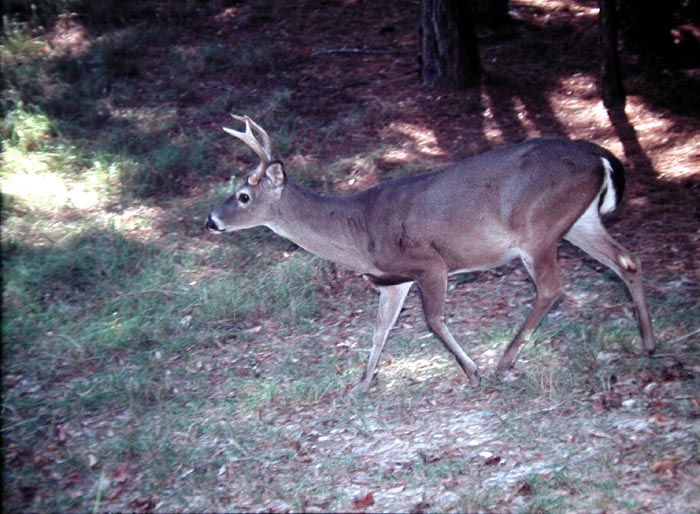 EDITOR'S
NOTE: What role does genes play in your local deer herd? Can the introduction
of a monster buck into a herd assure quality deer for years to come? The
answer to these and other questions will definitely surprise you. I talked
with Dr. Harry Jacobson, one of the nation's leading deer researchers
from Mississippi State University in Starkville, Mississippi, who currently
studies genetic effects on deer populations.
EDITOR'S
NOTE: What role does genes play in your local deer herd? Can the introduction
of a monster buck into a herd assure quality deer for years to come? The
answer to these and other questions will definitely surprise you. I talked
with Dr. Harry Jacobson, one of the nation's leading deer researchers
from Mississippi State University in Starkville, Mississippi, who currently
studies genetic effects on deer populations.
According to Dr. Harry Jacobson, hunters need to redefine the definition of a trophy buck. The Boone and Crockett and the Pope and Young scoring systems identify a trophy buck as a male animal with superior antlers in comparison to all other bucks of that same species, regardless of geographic location.
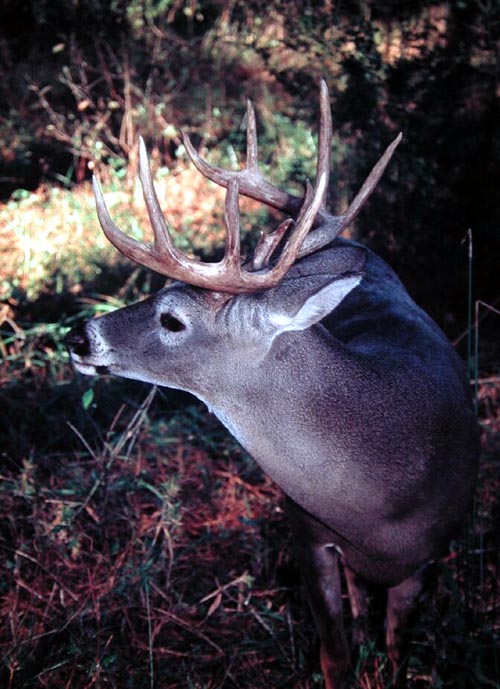 This
system has a major inequity in the way it determines a trophy. A Key deer
in Florida never will have the body weight or size and mass of antlers
of a buck in Alberta, Canada. A trophy south Florida deer only may have
8 points on his rack with a less than 18-inch inside spread of his main
beams. But he may be a true trophy buck for that area. An average-size
buck in Alberta may weigh 250 pounds and have 10-point antlers with a
20-inch spread of the main beams. But if a hunter bags that Alberta buck
in south Florida, the buck will be an extremely good trophy -- one of
the best ever taken in that region.
This
system has a major inequity in the way it determines a trophy. A Key deer
in Florida never will have the body weight or size and mass of antlers
of a buck in Alberta, Canada. A trophy south Florida deer only may have
8 points on his rack with a less than 18-inch inside spread of his main
beams. But he may be a true trophy buck for that area. An average-size
buck in Alberta may weigh 250 pounds and have 10-point antlers with a
20-inch spread of the main beams. But if a hunter bags that Alberta buck
in south Florida, the buck will be an extremely good trophy -- one of
the best ever taken in that region.
Therefore, Jacobson believes that to determine a true trophy, you must consider the geographic region from which it comes. He says hunters should consider the habitat and the availability and quality of food in the section of the country when awarding trophy status to any buck.
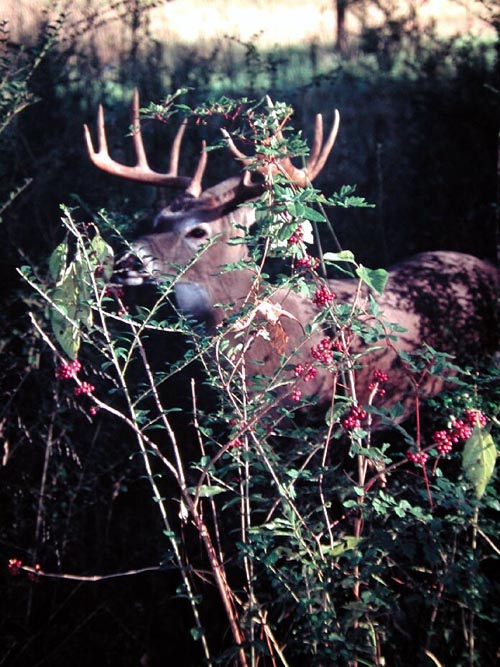 A
150-pound 8-point buck 6 years old or older may very well be the biggest
buck that region can produce because of habitat, food availability and
the genetics in the herd. Who's to say that if you bag that buck, you
haven't taken the best trophy in the area? "To produce the biggest
and the best trophy bucks your region can support, you must allow the
bucks to survive to 6 years," Jacobson explains.
A
150-pound 8-point buck 6 years old or older may very well be the biggest
buck that region can produce because of habitat, food availability and
the genetics in the herd. Who's to say that if you bag that buck, you
haven't taken the best trophy in the area? "To produce the biggest
and the best trophy bucks your region can support, you must allow the
bucks to survive to 6 years," Jacobson explains.
Question: Do you believe hunters should rate the quality
of bucks only by antler development and body weight?
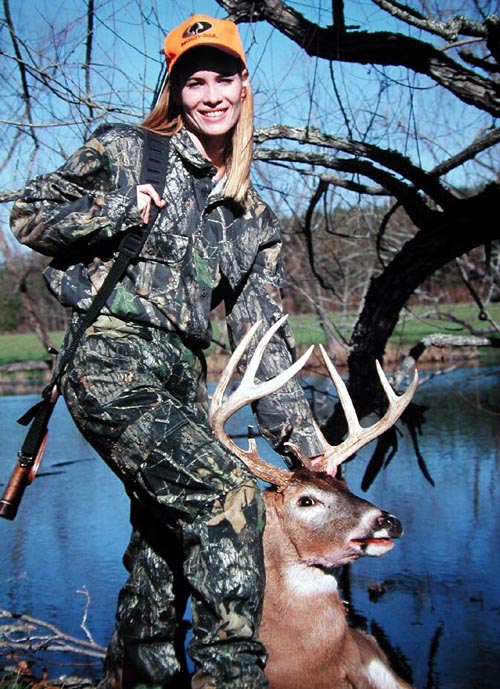 Answer:
I believe something is wrong with a hunter's mentality when he judges
a buck only by body weight and the size of his antlers. Quality doe management
means trying to manage the deer in a particular environment where they
reside. For instance, if a deer lives in a heavily forested area, having
antlers 3-feet wide gives him no advantage, because they'll get caught
on all the growth through which he has to move. If a deer lives in south
Texas, a large body size also will not benefit the buck. A small bodies
deer can thermally adapt easier to the Texas environment than a large
body size. In the North, a large body size becomes an overriding factor
because large bodies are more thermally efficient in cold climates. In
other words, a buck with a big body in the North can stay warmer and survive
better than a buck with a small body. In the South, a small-bodied buck
remains cooler and survives better that a big-bodied buck.
Answer:
I believe something is wrong with a hunter's mentality when he judges
a buck only by body weight and the size of his antlers. Quality doe management
means trying to manage the deer in a particular environment where they
reside. For instance, if a deer lives in a heavily forested area, having
antlers 3-feet wide gives him no advantage, because they'll get caught
on all the growth through which he has to move. If a deer lives in south
Texas, a large body size also will not benefit the buck. A small bodies
deer can thermally adapt easier to the Texas environment than a large
body size. In the North, a large body size becomes an overriding factor
because large bodies are more thermally efficient in cold climates. In
other words, a buck with a big body in the North can stay warmer and survive
better than a buck with a small body. In the South, a small-bodied buck
remains cooler and survives better that a big-bodied buck.
TOMORROW: DON'T SHOOT SPIKES
Check back each day this week for more about The Super Gene ...
Day 1 - Do Monster Bucks
Produce Monster Bucks?
Day 2 - Can Biologists Produce Monster Bucks?
Day 3 - What Is A Trophy Buck?
Day 4 - Don't Shoot Spikes
Day 5 - Managing A Deer Herd For Big Bucks